Effective communication transcends words; nonverbal cues—body language, tone, and facial expressions—significantly shape how messages are received. Misinterpretations of these cues can lead to misunderstandings, hindering professional success and personal relationships. This guide provides six actionable tips to help you master your nonverbal communication, ensuring your message is clear, confident, and impactful.
We’ll explore how to understand and utilize body language, vocal tone, and facial expressions to create a positive and engaging communication style. Learning to manage your nonverbal communication is a crucial skill for navigating professional settings, building strong relationships, and achieving your goals. From mastering confident posture to utilizing effective pauses, we’ll provide practical strategies you can implement immediately.
Understanding Nonverbal Cues
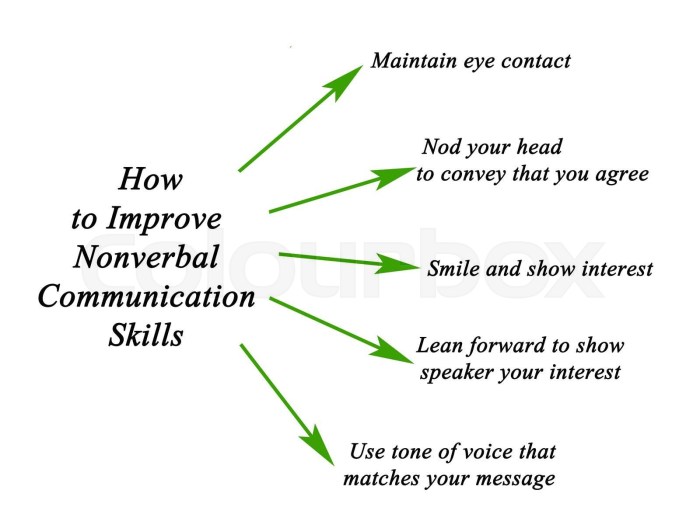
Nonverbal communication, encompassing body language, tone of voice, and facial expressions, significantly impacts how messages are received and interpreted in professional settings. Mastering the nuances of nonverbal cues is crucial for effective communication and building strong professional relationships. Misinterpretations can easily lead to misunderstandings and conflict, highlighting the importance of understanding both positive and negative nonverbal signals.
Positive and negative nonverbal cues can drastically alter the perception of a message. A confident posture, a warm tone, and a friendly smile can foster trust and rapport, while slumped shoulders, a harsh tone, and a frown can create distance and negativity. Understanding these subtle differences is key to projecting professionalism and ensuring your message is accurately received.
Examples of Positive and Negative Nonverbal Communication
The following table illustrates examples of positive and negative nonverbal communication in professional settings. Note that the impact of these cues can be context-dependent and influenced by cultural norms.
| Body Language | Tone of Voice | Facial Expression | Overall Impression |
|---|---|---|---|
| Direct eye contact, open posture, confident stance | Calm, clear, and assertive | Warm smile, approachable expression | Positive: Confident, approachable, and trustworthy |
| Slumped posture, fidgeting, avoiding eye contact | Hesitant, mumbling, monotone | Frowning, nervous or anxious expression | Negative: Lack of confidence, disinterest, and nervousness |
| Firm handshake, leaning slightly forward | Enthusiastic, upbeat, and engaging | Genuine smile, attentive expression | Positive: Shows engagement and interest |
| Crossed arms, looking away, minimal eye contact | Sharp, condescending, or dismissive | Scowling, dismissive expression | Negative: Indicates disengagement, judgment, and hostility |
Cultural Differences in Nonverbal Communication
Interpreting nonverbal cues requires cultural sensitivity. Gestures, facial expressions, and personal space preferences vary significantly across cultures. What might be considered polite or acceptable in one culture could be offensive or misunderstood in another. For instance, direct eye contact, valued in many Western cultures as a sign of honesty and engagement, can be perceived as rude or aggressive in some Asian cultures. Similarly, the meaning of a smile can also vary greatly depending on cultural context. A smile in one culture may be a genuine expression of happiness, while in another it could be a masking of other emotions. Understanding these cultural differences is crucial for effective cross-cultural communication.
Scenario: Miscommunication Due to Nonverbal Cues
Imagine a business meeting between a Japanese executive (Mr. Tanaka) and an American executive (Ms. Jones). Ms. Jones, intending to express her enthusiasm for a project, leans in closely, maintains strong eye contact, and speaks rapidly with a forceful tone. Mr. Tanaka, interpreting Ms. Jones’s actions through his cultural lens, feels overwhelmed and perceives her behavior as aggressive and confrontational. This leads to a breakdown in communication and a strained relationship. This miscommunication could have been avoided if Ms. Jones had been more mindful of cultural differences in personal space and communication styles. A more appropriate approach might have involved maintaining a slightly greater physical distance, using a gentler tone, and perhaps adjusting her speaking pace.
Mastering Body Language
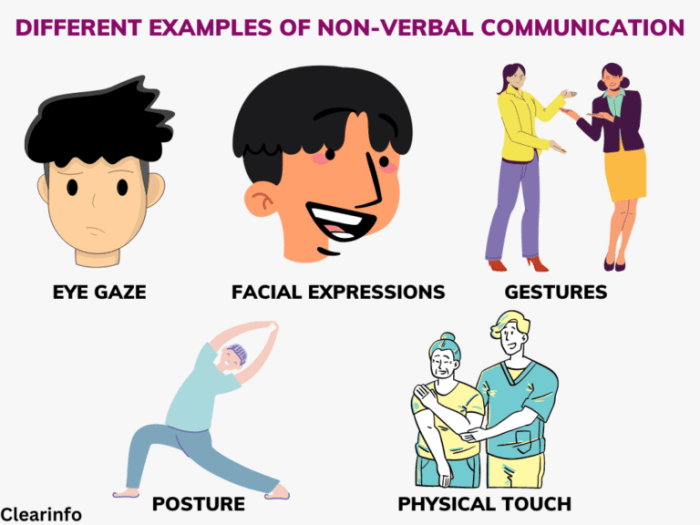
Effective body language is crucial for conveying confidence and approachability, significantly impacting how your message is received. Nonverbal cues often speak louder than words, shaping the audience’s perception and influencing the overall success of your communication. Mastering these cues can transform your presentations and interactions.
Confident and approachable body language projects an image of self-assurance and openness, encouraging engagement and trust from your audience. Conversely, negative body language can create barriers and hinder effective communication. This section explores techniques to cultivate positive nonverbal communication.
Five Techniques for Confident and Approachable Body Language
Employing these techniques during presentations can significantly enhance your communication effectiveness. They are designed to create a positive and engaging interaction with your audience.
- Maintain Open Posture: Avoid crossing your arms or legs, which can signal defensiveness or disinterest. Instead, keep your arms relaxed at your sides or use gestures naturally to emphasize points. An open posture conveys receptiveness and encourages connection.
- Use Purposeful Gestures: Incorporate hand gestures that complement your words, but avoid excessive or distracting movements. Controlled and meaningful gestures enhance your message and keep the audience engaged.
- Smile Authentically: A genuine smile conveys warmth and approachability. It helps create a positive atmosphere and fosters a connection with the audience. Avoid forced or insincere smiles, which can have the opposite effect.
- Project Confidence Through Stance: Stand tall with your shoulders back and relaxed. Avoid slouching or fidgeting, as this projects insecurity. A confident stance conveys authority and credibility.
- Move Deliberately: Move purposefully across the stage or presentation area, rather than pacing nervously. Controlled movement helps maintain audience attention and emphasizes key points.
Assertive versus Passive Nonverbal Communication
Understanding the differences in nonverbal communication between assertive and passive individuals is key to self-improvement and effective interaction. The following comparison highlights these key distinctions.
- Assertive Individuals:
- Maintain direct eye contact.
- Use open and relaxed body posture.
- Employ confident and controlled gestures.
- Speak clearly and at a moderate pace.
- Project a calm and self-assured demeanor.
- Passive Individuals:
- Avoid eye contact or make fleeting glances.
- Exhibit closed body posture (e.g., crossed arms, hunched shoulders).
- Use minimal or hesitant gestures.
- Speak softly and quickly, often hesitating.
- Project a nervous or uncertain demeanor.
Improving Posture and Eye Contact
Improving posture and eye contact are fundamental steps to enhancing your nonverbal communication. A step-by-step approach can help you cultivate these essential skills.
- Assess Your Current Posture: Stand in front of a mirror and observe your posture. Note any areas that need improvement, such as slumped shoulders or a forward head position.
- Practice Correct Posture: Stand tall with your feet shoulder-width apart, shoulders relaxed and back, and your head held high. Imagine a string gently pulling you upwards from the crown of your head.
- Strengthen Core Muscles: Engage in exercises that strengthen your core muscles, which provide support for good posture. Examples include planks, bridges, and Pilates exercises.
- Practice Eye Contact: Begin by making eye contact with individuals in a comfortable setting. Gradually increase the duration and frequency of your eye contact in more challenging situations.
- Engage Your Audience: When presenting, consciously make eye contact with different individuals in the audience. This helps maintain engagement and connection.
- Monitor and Adjust: Regularly assess your posture and eye contact, making adjustments as needed. Seek feedback from others to identify areas for improvement.
Utilizing Vocal Tone and Pace

Effective nonverbal communication extends beyond body language; your voice plays a crucial role in conveying your message and impacting your audience. Vocal tone and pace are powerful tools that can significantly influence how your words are received, shaping the listener’s perception of your confidence, enthusiasm, and overall credibility. Mastering these elements can elevate your communication skills considerably.
Your vocal tone and pace directly influence the emotional impact of your message. A high-pitched, rapid pace often suggests nervousness or anxiety, while a low, slow tone can project calmness and authority. Conversely, a vibrant, energetic tone paired with a moderate pace typically conveys enthusiasm and confidence. Consider a public speaker delivering a presentation: a monotone, sluggish delivery will likely bore the audience, whereas a varied tone and well-paced speech will keep them engaged and interested. The subtle shifts in your voice can communicate a wide range of emotions, from excitement and joy to sadness and concern, even without explicitly stating these feelings.
Vocal Tone and Pace in Different Contexts
Adjusting your vocal delivery is essential for effective communication across various contexts. A formal presentation to a board of directors requires a different vocal approach than a casual conversation with colleagues. In a formal setting, a measured tone and deliberate pace are appropriate, projecting professionalism and competence. However, in a casual setting, a more relaxed tone and slightly faster pace might be suitable, fostering a sense of ease and connection. Understanding your audience and the specific situation will guide you in selecting the most appropriate vocal delivery style. For instance, when addressing children, a higher pitch and slower pace may be more effective in capturing their attention and understanding. In contrast, when addressing a group of experienced professionals, a lower, more authoritative tone may be more appropriate.
Using Pauses for Emphasis and Engagement
Strategic pauses are not just silences; they are powerful tools for enhancing your communication. Pauses allow your audience to process information, creating moments of reflection and emphasis. A well-placed pause before a key point can heighten its impact, making it more memorable. Furthermore, pauses help to maintain audience engagement by preventing information overload. They offer breathing room, both for the speaker and the listener, promoting clearer understanding and a more engaging experience. Consider a presenter who uses pauses strategically before and after crucial data points. This allows the audience to absorb the information, consider its implications, and enhances the message’s retention. Conversely, a speaker who rushes through their points without pauses may lose the audience’s attention and fail to deliver the message effectively. Mastering the art of the pause is a valuable skill in any communication scenario.
Closure

Mastering nonverbal communication is an ongoing process, requiring self-awareness and consistent practice. By paying attention to your body language, vocal tone, and facial expressions, you can significantly enhance your communication effectiveness. Remember, nonverbal cues often speak louder than words, so honing these skills is key to building rapport, conveying confidence, and achieving your communication objectives. Consistent practice and mindful self-reflection will help you refine your nonverbal communication skills, leading to more impactful interactions in all aspects of your life.