Taking control of your finances can feel daunting, but it doesn’t have to be. This four-week guide provides a structured approach to budgeting, debt management, saving, and investing, empowering you to build a stronger financial future. We’ll explore practical strategies and tools to help you navigate the complexities of personal finance, making the process manageable and even enjoyable.
Over the next four weeks, you’ll learn to create a realistic budget, develop effective debt repayment plans, understand various savings vehicles, and explore the basics of investing. We’ll cover everything from tracking expenses and setting financial goals to understanding investment risk and diversification. By the end, you’ll have the knowledge and confidence to make informed financial decisions.
Budgeting and Tracking Expenses
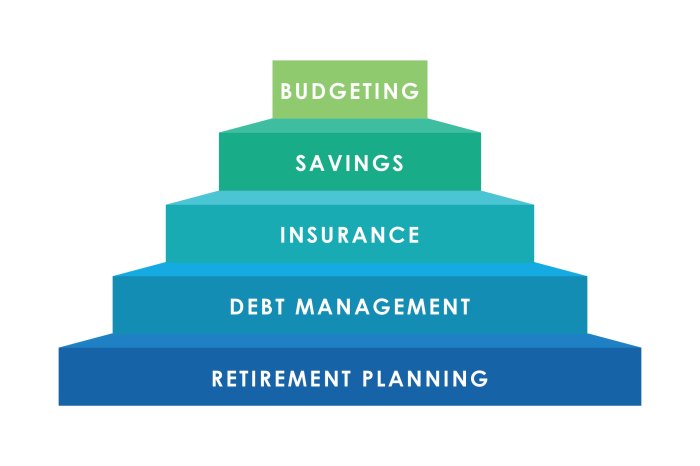
Effective budgeting and expense tracking are foundational to achieving your personal financial goals. Understanding where your money goes allows you to identify areas for improvement and make informed decisions about your spending habits. This section will guide you through creating a budget, exploring different budgeting methods, and utilizing tools to track your expenses effectively.
Sample Monthly Budget Template
A well-structured budget provides a clear overview of your financial situation. The following table illustrates a simple monthly budget template. Remember to adapt this template to your specific income and expenses.
| Income | Expenses (Fixed) | Expenses (Variable) | Net Income |
|---|---|---|---|
| $4000 | $1500 (Rent, Loan Payments, Subscriptions) | $1000 (Groceries, Entertainment, Dining Out) | $1500 |
Budgeting Methods
Several budgeting methods can help you manage your finances effectively. Choosing the right method depends on your personal preferences and financial goals.
The 50/30/20 rule is a simple approach that suggests allocating 50% of your after-tax income to needs, 30% to wants, and 20% to savings and debt repayment. For example, with a $4000 after-tax income, this would mean $2000 for needs (housing, food, transportation), $1200 for wants (entertainment, dining), and $800 for savings and debt repayment.
Zero-based budgeting involves allocating every dollar of your income to a specific category, ensuring that your income equals your expenses. This method promotes mindful spending and helps you avoid overspending. For example, you would meticulously budget for every expense, from groceries to entertainment, leaving no unallocated funds.
Expense Tracking Tips
Accurately tracking your expenses is crucial for effective budgeting. Utilizing budgeting apps or spreadsheets can significantly simplify this process.
Budgeting Apps: Many user-friendly budgeting apps (e.g., Mint, YNAB, Personal Capital) automatically categorize transactions, provide visual representations of your spending, and offer helpful financial insights. These apps often integrate with your bank accounts for seamless data import.
Spreadsheets: A simple spreadsheet (e.g., in Google Sheets or Microsoft Excel) can also be used effectively. Create columns for date, description, category, and amount. Regularly inputting your transactions allows you to monitor your spending patterns.
Categorizing Expenses
Categorizing expenses provides valuable insights into your spending habits. This allows you to identify areas where you may be overspending and make adjustments accordingly.
Common expense categories include housing, transportation, food, utilities, entertainment, and debt payments. More granular categorization (e.g., splitting “food” into “groceries,” “dining out,” and “coffee”) can provide a more detailed understanding of your spending patterns. By analyzing these categories, you can make informed decisions to optimize your budget and achieve your financial goals.
Debt Management and Savings Strategies
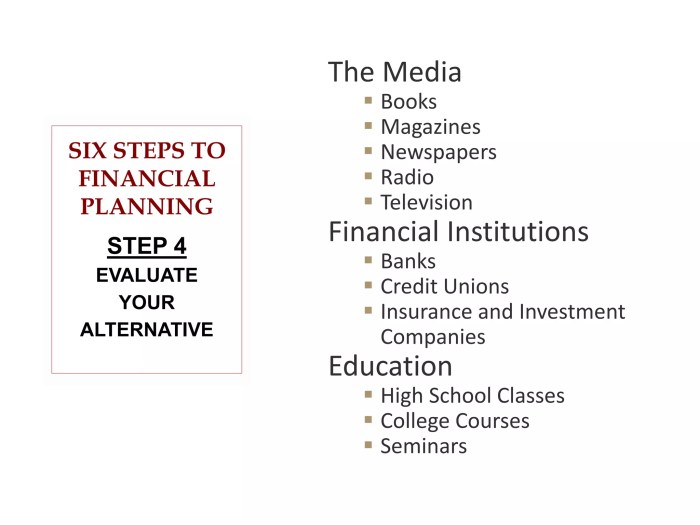
Taking control of your finances involves effectively managing debt and building a solid savings foundation. This section Artikels strategies for tackling high-interest debt and maximizing your savings potential through various vehicles and automation. Understanding these concepts is crucial for achieving long-term financial well-being.
Debt Snowball and Debt Avalanche Methods
High-interest debt can quickly spiral out of control. Two popular methods for tackling this are the debt snowball and debt avalanche methods. Both aim to eliminate debt, but they differ in their approach. The debt snowball method prioritizes paying off the smallest debts first, regardless of interest rate, for psychological motivation. The debt avalanche method, on the other hand, prioritizes paying off the debts with the highest interest rates first to minimize overall interest paid.
- Debt Snowball Method: List all your debts from smallest balance to largest, regardless of interest rate. Focus all extra payments on the smallest debt until it’s paid off. Then, roll that payment amount into the next smallest debt, creating a “snowball” effect. This method provides early wins, boosting morale and motivation.
- Debt Avalanche Method: List all your debts from highest interest rate to lowest. Focus all extra payments on the debt with the highest interest rate. Once that debt is paid, move on to the next highest interest rate debt. This method minimizes the total interest paid over time, resulting in significant long-term savings.
Savings Vehicle Comparison
Several savings vehicles offer different benefits and levels of risk. Understanding the nuances of each helps you choose the best option for your financial goals.
| Savings Vehicle | Description | Pros | Cons |
|---|---|---|---|
| High-Yield Savings Account | Interest-bearing account with FDIC insurance. | High interest rates, easy access to funds, FDIC insured. | Interest rates can fluctuate. |
| Money Market Account (MMA) | Similar to a savings account but may offer slightly higher interest rates and check-writing capabilities. | Higher interest rates than savings accounts, check-writing capability. | May have minimum balance requirements, limited number of transactions. |
| Certificate of Deposit (CD) | Fixed-term deposit with a fixed interest rate. | Higher interest rates than savings accounts and MMAs, FDIC insured. | Limited access to funds, penalties for early withdrawal. |
Automating Savings and Investing
Automating your savings and investments simplifies the process and ensures consistent contributions. Setting up automatic transfers from your checking account to your savings or investment accounts eliminates the need for manual effort and reduces the risk of forgetting to save.
The benefits of automation include:
- Consistency: Regular contributions build wealth steadily over time.
- Discipline: Automation removes the temptation to spend money that could otherwise be saved.
- Convenience: It’s effortless and requires minimal time and effort.
Interest Earned Calculation
Calculating interest earned helps you understand the returns on your savings. The formula for simple interest is:
Interest = Principal x Rate x Time
For example, if you deposit $1000 in a high-yield savings account with a 2% annual interest rate, the interest earned in one month would be:
Interest = $1000 x (0.02/12) x 1 = $1.67 (approximately)
Note that this is simple interest calculation. Many accounts compound interest, meaning you earn interest on your interest.
Financial Goal Setting and Investment Basics

Effective financial management requires setting clear financial goals and understanding basic investment principles. This section will guide you through defining your financial aspirations and exploring different investment options to help you achieve them. We’ll cover short-term and long-term goals, explain various investment types, and discuss risk management strategies.
Short-Term and Long-Term Financial Goals
Defining your financial goals is crucial for effective planning. Short-term goals are typically achieved within one year, while long-term goals extend beyond that timeframe. Clearly defining these goals allows you to create a roadmap for your financial future and prioritize your spending and saving accordingly.
- Short-Term Goals (within 1 year): Examples include paying off a credit card debt, saving for a down payment on a car, or accumulating funds for a vacation. These goals often require focused saving and budgeting.
- Long-Term Goals (beyond 1 year): Examples include saving for retirement, buying a house, funding your children’s education, or creating a substantial emergency fund. These goals often necessitate a long-term investment strategy.
Investing in Stocks, Bonds, and Mutual Funds
Stocks, bonds, and mutual funds represent different investment vehicles with varying levels of risk and potential returns. Understanding their distinctions is vital for making informed investment decisions.
Stocks represent ownership in a company. Their value fluctuates based on the company’s performance and market conditions. Bonds, on the other hand, are essentially loans you make to a company or government. They offer a fixed interest rate and return your principal at maturity. Mutual funds pool money from multiple investors to invest in a diversified portfolio of stocks, bonds, or other assets, offering diversification and professional management.
Key Factors in Choosing an Investment Strategy
Selecting an appropriate investment strategy involves considering several key factors. Your risk tolerance, time horizon, and financial goals all play a significant role in determining the best approach for your circumstances.
- Risk Tolerance: This refers to your comfort level with the possibility of losing money. A higher risk tolerance might lead to investments in higher-return, higher-risk assets.
- Time Horizon: The length of time you plan to invest significantly impacts your strategy. Longer time horizons allow for greater risk-taking, as there’s more time to recover from potential losses.
- Financial Goals: Your goals (e.g., retirement, down payment) will dictate the type of investments you choose and your overall investment timeline.
Understanding Investment Risk and Diversification
Investment risk refers to the possibility of losing some or all of your invested capital. Diversification is a key strategy to mitigate this risk. It involves spreading your investments across different asset classes (stocks, bonds, real estate, etc.) to reduce the impact of poor performance in any single asset. A well-diversified portfolio can help cushion against significant losses.
Investment Options and Associated Risk Levels
| Investment Option | Risk Level (Low to High) | Potential Return (Low to High) | Example |
|---|---|---|---|
| Savings Accounts | Low | Low | Traditional bank savings account |
| Certificates of Deposit (CDs) | Low to Moderate | Low to Moderate | Fixed-term deposit with a bank |
| Government Bonds | Low to Moderate | Low to Moderate | U.S. Treasury bonds |
| Corporate Bonds | Moderate | Moderate to High | Bonds issued by large corporations |
| Stocks (Large-Cap) | Moderate to High | Moderate to High | Shares in established, large companies |
| Stocks (Small-Cap) | High | High | Shares in smaller, less established companies |
| Real Estate | Moderate to High | Moderate to High | Investment property |
Ultimate Conclusion
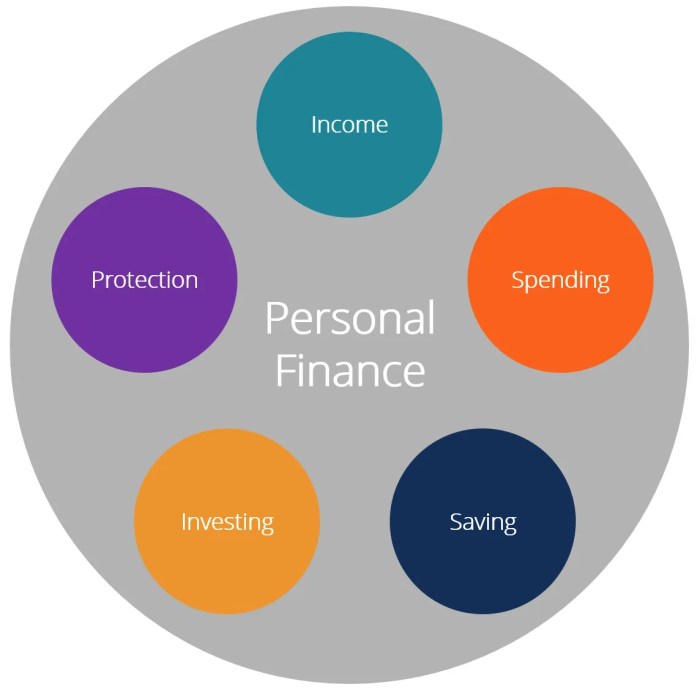
Mastering personal finance is a journey, not a destination. This four-week guide provides a solid foundation for building healthy financial habits. By consistently applying the strategies and techniques discussed, you can steadily improve your financial well-being, achieving your short-term and long-term goals. Remember, consistent effort and mindful decision-making are key to long-term financial success. Start building your brighter financial future today!