Project success hinges on effectively navigating inherent uncertainties. This guide provides four key strategies for proactively managing project risks, transforming potential pitfalls into opportunities for growth and efficient resource allocation. We’ll explore practical methods for identifying, assessing, mitigating, and monitoring risks throughout the project lifecycle, ensuring smoother execution and a higher likelihood of achieving your objectives.
From developing robust risk assessment matrices to implementing comprehensive mitigation strategies and establishing effective monitoring systems, we’ll cover the essential steps to build resilience into your project plans. This approach not only minimizes disruptions but also fosters a proactive and informed decision-making environment.
Identifying and Assessing Project Risks
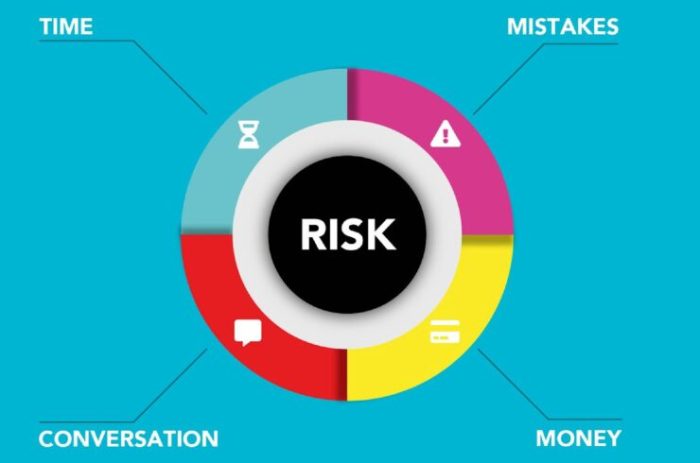
Effective risk management is crucial for project success. Identifying and assessing potential risks early allows for proactive mitigation strategies, reducing the likelihood of delays, cost overruns, and overall project failure. This involves a systematic approach to understanding the threats facing the project and their potential impact.
Common Risk Categories
Project risks typically fall into four broad categories: technical, schedule, cost, and resource risks. Understanding these categories helps in structuring a comprehensive risk assessment.
- Technical Risks: These relate to the technical feasibility and implementation of the project. Examples include unforeseen technological challenges, software bugs, incompatibility issues between systems, or inadequate technological expertise within the team.
- Schedule Risks: These pertain to the timely completion of project milestones and the overall project timeline. Delays due to unforeseen circumstances, dependencies on external factors, or inaccurate initial estimations are common examples.
- Cost Risks: These risks involve exceeding the allocated budget. Factors such as underestimated costs, unexpected expenses, inflation, or changes in resource availability contribute to cost risks.
- Resource Risks: These risks encompass the availability and competence of the project team and other resources. Examples include staff turnover, skill shortages, equipment malfunction, or inadequate access to necessary materials.
Risk Assessment Matrix
A risk assessment matrix helps visualize the likelihood and impact of identified risks. This allows prioritization of mitigation efforts based on the potential severity of each risk.
| Risk | Likelihood (1-5, 1=Unlikely, 5=Very Likely) | Impact (1-5, 1=Minor, 5=Catastrophic) | Mitigation Strategy |
|---|---|---|---|
| Software incompatibility | 4 | 3 | Thorough compatibility testing; contingency plan for software migration |
| Key team member leaving | 2 | 4 | Cross-training; succession planning; clear roles and responsibilities |
| Unexpected regulatory changes | 1 | 5 | Regular monitoring of regulatory landscape; engagement with regulatory bodies |
| Supplier delays | 3 | 2 | Multiple sourcing; buffer stock; close communication with suppliers |
Qualitative and Quantitative Risk Assessment
Qualitative risk assessment focuses on subjective judgment and expert opinion to assess the likelihood and impact of risks. This is often used in the early stages of a project when detailed data might be unavailable. Quantitative risk assessment, on the other hand, utilizes numerical data and statistical methods to analyze risks more precisely. This approach might involve techniques like Monte Carlo simulation to model the probability of different outcomes.
Risk Registers
A risk register is a centralized document that records all identified project risks. It typically includes details such as the risk description, likelihood, impact, assigned owner, mitigation strategy, contingency plans, and status updates. The purpose of a risk register is to provide a comprehensive overview of the project’s risk profile, enabling proactive management and tracking of risks throughout the project lifecycle. A well-maintained risk register facilitates communication among stakeholders and supports informed decision-making. For example, a risk register might list the risk of “delays in obtaining necessary permits,” with a likelihood of 3, an impact of 4, a mitigation strategy of “expediting the permit application process,” and a contingency plan of “securing temporary permits.”
Developing a Risk Mitigation Strategy
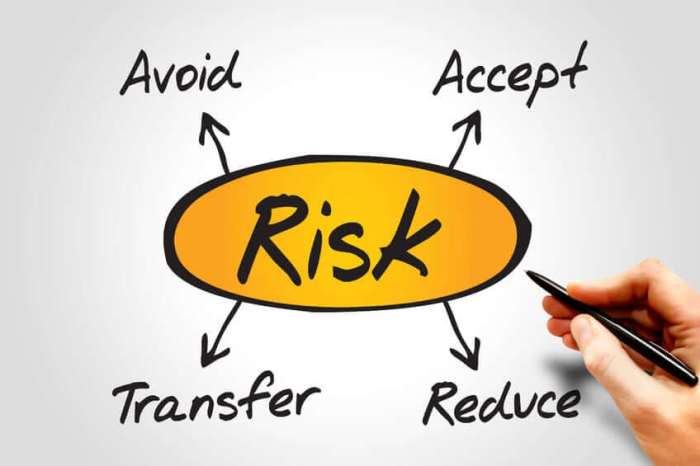
Developing a robust risk mitigation strategy is crucial for project success. A well-defined strategy proactively addresses potential problems, minimizing their impact and increasing the likelihood of achieving project objectives on time and within budget. This involves a systematic approach to identifying risks, analyzing their potential consequences, and implementing plans to reduce their likelihood or impact.
A comprehensive risk mitigation strategy follows a structured process. This process allows for a proactive and adaptable approach to managing uncertainties throughout the project lifecycle.
Step-by-Step Risk Mitigation Plan
Effective risk mitigation requires a methodical approach. The following steps Artikel a structured process for developing a comprehensive risk mitigation strategy.
- Risk Identification and Analysis: This initial step involves identifying all potential risks and analyzing their probability and impact. This builds upon the previous section on risk identification and assessment, using techniques such as brainstorming, SWOT analysis, and risk checklists.
- Risk Response Planning: For each identified risk, a response strategy needs to be developed. This involves selecting the most appropriate response from among the available options (avoidance, mitigation, transference, or acceptance).
- Risk Response Implementation: Put the chosen response strategies into action. This may involve implementing preventative measures, developing contingency plans, or securing insurance.
- Risk Monitoring and Control: Continuously monitor the identified risks and the effectiveness of the mitigation strategies. Adjust the plan as needed based on changes in the project environment or the emergence of new risks.
- Risk Documentation: Maintain a comprehensive risk register that documents all identified risks, their associated responses, and the outcomes of the mitigation efforts. This record provides valuable insights for future projects.
Risk Response Strategies: A Comparison
Several strategies exist for handling identified project risks. Each approach has its strengths and weaknesses, and the best choice depends on the specific circumstances of the risk.
| Risk Response Strategy | Description | Advantages | Disadvantages | Example |
|---|---|---|---|---|
| Avoidance | Eliminating the risk entirely by not undertaking the activity that causes it. | Completely eliminates the risk. | May miss opportunities. | Deciding not to launch a new product in a volatile market. |
| Mitigation | Reducing the probability or impact of a risk. | Reduces the likelihood or severity of a risk event. | Requires resources and effort. | Implementing a robust quality control system to reduce the risk of defects. |
| Transference | Shifting the risk to a third party, such as an insurance company. | Transfers the financial burden of the risk. | May be costly; doesn’t eliminate the risk. | Purchasing insurance to cover potential losses due to unforeseen events. |
| Acceptance | Accepting the risk and its potential consequences. | Simple and requires minimal effort. | May lead to significant losses if the risk materializes. | Accepting a small risk of project delay due to minor technical issues. |
Contingency Plan: Hypothetical Project Scenario
Let’s consider a hypothetical software development project. A key risk is the failure of a third-party API crucial for the application’s functionality.
A contingency plan might include:
- Alternative Solution: Develop a backup solution using an alternative API or internal functionality. This involves allocating resources to develop and test the backup solution.
- Resource Allocation: Allocate a dedicated team member to monitor the third-party API’s stability and proactively identify potential issues. Additionally, allocate a portion of the project budget to the development of the backup solution.
- Communication Plan: Establish clear communication channels to keep stakeholders informed about the status of the API and any potential impacts on the project timeline or deliverables.
Resources for Effective Risk Mitigation
Effective risk mitigation requires a commitment of resources. These resources can be categorized as follows:
- Human Resources: Dedicated project manager, risk management specialist, team members with relevant expertise.
- Financial Resources: Budget allocated for contingency planning, insurance premiums, and potential cost overruns.
- Technological Resources: Software tools for risk assessment, project management software, and communication platforms.
Implementing and Monitoring Risk Management
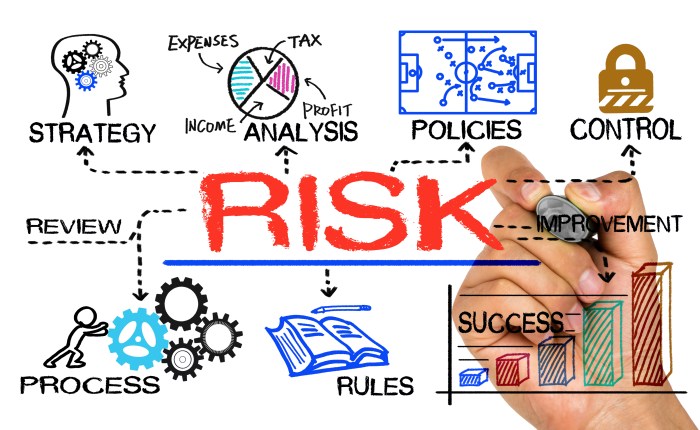
Effective risk management isn’t a one-time activity; it’s an ongoing process integrated throughout the project lifecycle. Successfully implementing and monitoring your risk management plan ensures proactive responses to emerging threats and opportunities, ultimately improving project outcomes and minimizing disruptions. This involves consistently tracking risks, adapting mitigation strategies, and keeping stakeholders informed.
Implementing risk management requires a proactive approach, integrating it into the project’s workflow from initiation to closure. This involves utilizing tools and techniques to track risks, monitor their evolution, and execute contingency plans. Regular reporting and communication are crucial for maintaining transparency and ensuring timely adjustments to the project plan.
Visualizing Risk Management with a Gantt Chart
A Gantt chart, a popular project management tool, can be effectively adapted to visualize risk management. Imagine a standard Gantt chart showing project tasks on the horizontal axis and time on the vertical axis. Each task bar represents the duration of the task. To integrate risk management, we can add elements to represent identified risks. For instance, a risk identified as potentially delaying Task A might be represented by a separate, smaller bar overlapping Task A’s bar, indicating the potential delay. The color of this risk bar could indicate the risk’s severity (red for high, yellow for medium, green for low). Further, contingency plans, such as allocating extra time or resources, could be represented by extending the task bar or adding a new, smaller bar illustrating the contingency measures. This visual representation provides a clear, at-a-glance overview of the project schedule and potential risk impacts, enabling proactive planning and mitigation.
Regular Risk Monitoring and Reporting
Regular monitoring and reporting are paramount to effective risk management. This involves periodic reviews of the risk register, comparing the predicted risks against actual project progress. For example, a weekly risk review meeting could be held to discuss emerging risks, assess the effectiveness of mitigation strategies, and adjust plans as needed. Reports should clearly communicate the current risk status, including any changes in risk likelihood or impact. These reports should be concise and tailored to the audience, providing stakeholders with the necessary information to make informed decisions. Using a simple traffic light system (red, amber, green) to indicate risk severity simplifies communication and ensures quick understanding. A well-structured report might include a summary of identified risks, their current status, mitigation actions taken, and any recommended changes to the project plan.
Tracking and Updating the Risk Register and Contingency Plans
A robust system for tracking and updating the risk register is essential. The risk register should be a dynamic document, regularly updated to reflect the evolving project landscape. Each risk entry should include details such as the risk description, likelihood, impact, owner, mitigation strategy, contingency plan, and status. Using a spreadsheet or dedicated project management software allows for easy tracking and updating. When a risk event occurs, the register should be updated to reflect the actual outcome, including the effectiveness of the mitigation strategy and any lessons learned. Contingency plans should be reviewed and updated as needed, ensuring they remain relevant and effective. Regular backups of the risk register are crucial to prevent data loss.
Communicating Risk Information to Stakeholders
Effective communication is key to successful risk management. Stakeholders need to be informed about potential risks and the measures taken to mitigate them. The frequency and format of communication should be tailored to the stakeholder’s needs and level of involvement. For example, executive-level reports might focus on high-level summaries and potential impacts on project goals, while project team members might need more detailed information about specific tasks and risks. Regular meetings, email updates, and visual dashboards can be used to disseminate risk information effectively. Transparency and proactive communication build trust and ensure that everyone is aware of potential challenges and the plans to address them. Open communication channels also encourage early identification of new risks.
Final Thoughts
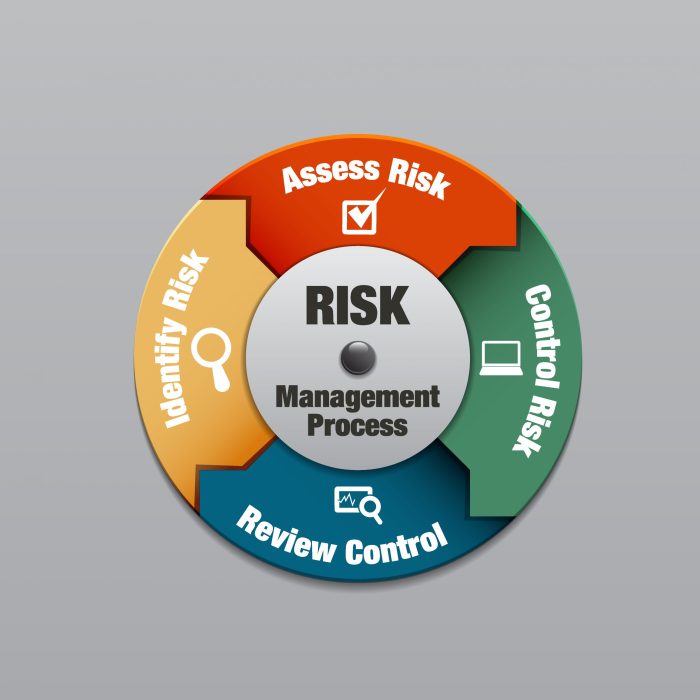
By implementing a proactive risk management strategy, projects can transition from reactive firefighting to confident execution. This involves a consistent cycle of identification, assessment, mitigation, and monitoring, ensuring that potential problems are addressed before they escalate into major setbacks. The techniques Artikeld here equip project managers with the tools to build resilient projects, ultimately increasing the probability of successful outcomes and exceeding expectations.