Mastering the art of handling sales objections is crucial for success. This guide provides five actionable tips to confidently navigate customer concerns, transforming potential roadblocks into opportunities for growth. We’ll explore proven strategies for identifying, addressing, and even turning objections into compelling value propositions, ultimately boosting your sales performance.
From understanding the underlying reasons behind common objections to employing empathetic and confident communication techniques, this guide offers a practical framework for building stronger customer relationships and closing more deals. Learn how to proactively address potential objections, reframe negative comments into positive affirmations, and ultimately, increase your sales conversion rates.
Identifying and Addressing Common Sales Objections
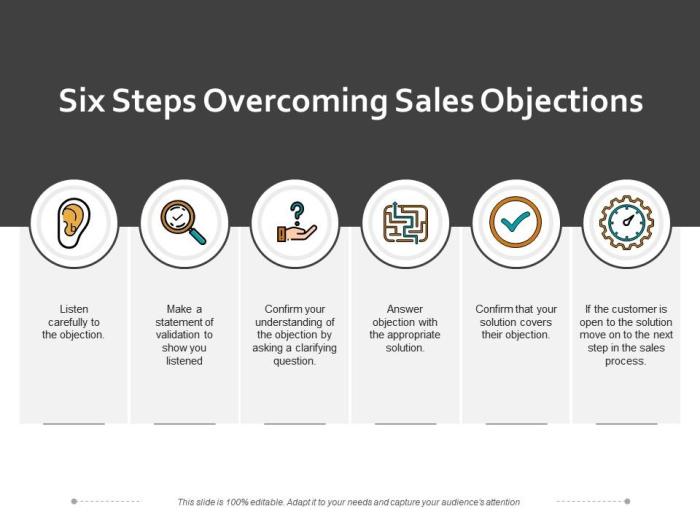
Understanding and effectively handling sales objections is crucial for closing deals and building strong customer relationships. Addressing objections demonstrates your preparedness and builds trust, ultimately leading to higher conversion rates. This section will explore common objections, their underlying causes, and effective strategies for navigating them.
Common Sales Objections and Underlying Concerns
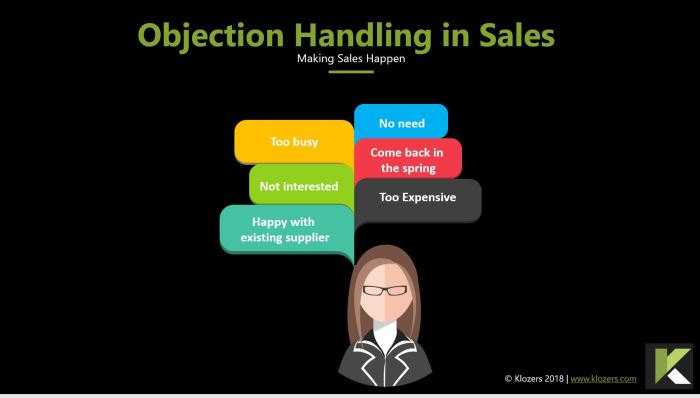
Sales objections often mask deeper customer concerns. Understanding these underlying issues is key to crafting effective responses. The following examples illustrate this point.
| Objection | Underlying Concern | Response Strategy | Potential Follow-up |
|---|---|---|---|
| “It’s too expensive.” | Price sensitivity; perceived lack of value; budgetary constraints. | Highlight the long-term value and ROI; explore financing options; compare pricing to competitors while emphasizing superior features. | Send a comparative pricing analysis; offer a trial period or a phased implementation plan. |
| “I need to think about it.” | Indecision; lack of urgency; need for more information; seeking approval from others. | Reiterate key benefits; address any remaining questions; provide additional resources; suggest a timeline for decision-making. | Send a follow-up email summarizing the discussion and offering additional support. |
| “We’re happy with our current provider.” | Loyalty; perceived lack of need for change; fear of switching costs. | Identify the shortcomings of their current provider; highlight the unique advantages and benefits of your offering; address concerns about the transition process. | Schedule a demo showcasing the key differences and benefits; provide case studies of successful transitions. |
| “I don’t have time for this right now.” | Prioritization issues; lack of perceived immediate need; scheduling conflicts. | Offer a brief, focused presentation; suggest a convenient time to connect; emphasize the time-saving benefits of your product/service. | Reschedule the meeting at a more convenient time; send a concise summary of the key points. |
| “We’re not interested.” | Genuine lack of interest; mismatched needs; negative past experiences. | Respectfully acknowledge their response; attempt to understand their reasons; offer alternative solutions or options if applicable. | Follow up after a reasonable period to see if their situation has changed or if there are new needs. |
Proactive Objection Handling
Proactively addressing potential objections before they arise can significantly improve your sales success. This involves thorough preparation, understanding your target audience, and anticipating their potential concerns. By anticipating these objections and addressing them preemptively, you can establish trust and credibility with potential customers. This builds confidence in your product or service and reduces the likelihood of encountering roadblocks during the sales process. For instance, you might address pricing concerns upfront by highlighting the value proposition and return on investment. Similarly, you can address time constraints by offering a concise and efficient presentation. This proactive approach demonstrates professionalism and showcases your commitment to meeting the customer’s needs.
Handling Objections with Confidence and Empathy
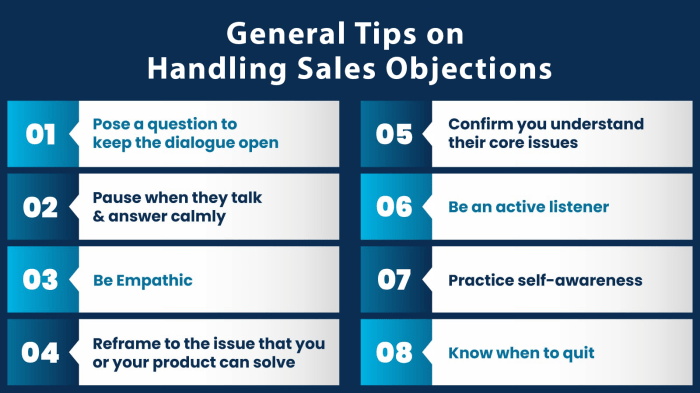
Successfully navigating sales objections hinges not just on having the right answers, but on building a strong rapport with the customer. Addressing concerns with confidence and empathy fosters trust and increases the likelihood of a positive outcome. It’s about understanding the customer’s perspective and responding in a way that acknowledges their feelings while effectively presenting your solution.
Empathetic and confident communication are crucial for overcoming objections. Active listening allows you to fully grasp the customer’s concerns, while empathetic responses demonstrate understanding and build trust. This approach transforms a potentially confrontational situation into a collaborative problem-solving exercise. By validating the customer’s feelings and addressing their needs, you create a more receptive environment for your sales pitch.
Techniques for Building Rapport and Trust
Building rapport and trust is essential when a customer raises an objection. These actions can significantly improve the interaction and increase the chances of closing the sale.
- Mirroring and Matching: Subtly mirroring the customer’s body language and tone can create a subconscious connection, fostering a sense of understanding and rapport. For example, if the customer speaks slowly and deliberately, mirroring this pace can help them feel more at ease.
- Validating Customer Feelings: Acknowledge and validate the customer’s concerns, even if you don’t agree with them. Phrases like, “I understand your concern about the price,” or “That’s a valid point,” show empathy and build trust. This demonstrates you’re listening and taking their perspective seriously.
- Finding Common Ground: Look for shared values, interests, or experiences to create a connection. This could be as simple as mentioning a shared local sports team or a mutual appreciation for a particular hobby. This shared connection helps build trust and rapport.
Active Listening and Empathetic Responses
Active listening involves fully concentrating on what the customer is saying, both verbally and nonverbally. It’s more than just hearing; it’s about understanding the underlying message and emotions. Empathetic responses demonstrate that you understand and care about the customer’s perspective.
Active listening helps identify the root cause of the objection, allowing for a more targeted and effective response. For example, a price objection might stem from budget constraints, a perceived lack of value, or a fear of commitment. By actively listening, you can determine the specific reason behind the objection and tailor your response accordingly. Empathetic responses, such as acknowledging the customer’s financial concerns or highlighting the long-term value of your product, demonstrate understanding and build trust, increasing the likelihood of a successful outcome.
Scenario: Handling a Price Objection
Imagine a customer says, “Your product is too expensive.” A non-empathetic response might be, “But our competitors charge more!” This is confrontational and dismissive.
A better approach would be to use both empathy and confidence:
“I understand your concern about the price. Many of our clients initially feel the same way, but let’s explore the value you’ll receive. While the initial investment is higher, consider the long-term savings and increased efficiency our product offers. For example, [quantifiable benefit, e.g., ‘our system will automate X process, saving you Y hours per week, which translates to Z dollars annually’]. Would you be open to discussing how our product can help you achieve [customer’s goal, e.g., ‘increase productivity and reduce operational costs’]?”
This response acknowledges the customer’s feeling, validates their concern, and then confidently shifts the focus to the value proposition. It offers a solution and invites further discussion, turning a potential roadblock into an opportunity to build a stronger relationship and ultimately close the sale.
Turning Objections into Opportunities
Smart salespeople don’t see objections as roadblocks; they view them as valuable insights into a prospect’s needs and concerns. These objections offer a chance to deepen your understanding and tailor your pitch to resonate more effectively. By skillfully addressing objections, you can build trust, demonstrate expertise, and ultimately close more deals.
Turning an objection into an opportunity requires a shift in perspective. Instead of becoming defensive, consider the objection as a question needing further clarification or a chance to highlight a specific benefit previously overlooked. This proactive approach transforms a potential deal-breaker into a stepping stone towards a successful sale.
Directly Addressing Versus Subtly Redirecting Objections
Two primary approaches exist for handling sales objections: directly addressing them and subtly redirecting the conversation. Directly addressing an objection involves acknowledging the concern and providing a clear, concise answer. This approach is effective when the objection is straightforward and easily refuted with facts or evidence. Subtly redirecting the conversation involves acknowledging the concern but shifting the focus to a more positive aspect of your product or service. This is useful when the objection is based on a misunderstanding or a less significant concern. The choice between these approaches depends on the nature of the objection and your assessment of the prospect’s concerns. For instance, a price objection might be directly addressed with a detailed cost-benefit analysis, while a concern about a feature’s complexity could be subtly redirected by highlighting the ease of use through user-friendly design and readily available support.
Five Key Benefits Addressing Common Objections
Understanding how your product’s key benefits directly counter common objections is crucial. Here are five key benefits, each directly addressing a frequent customer concern:
- Superior Quality: Addresses objections about durability, reliability, and longevity. For example, “Our product is built with premium materials and rigorously tested to ensure it lasts for years, unlike our competitors’ products that often fail prematurely.” This directly counters concerns about product lifespan and potential repair costs.
- Cost-Effectiveness: Addresses price objections by highlighting long-term savings or value-added features. For instance, “While our initial investment is higher, the long-term savings in energy consumption and reduced maintenance costs will significantly offset the initial expense over the product’s lifespan. Our analysis shows a return on investment within [Timeframe].” This directly refutes price-based objections by focusing on the overall cost of ownership.
- Exceptional Customer Support: Addresses concerns about post-purchase support and assistance. For example, “Our dedicated customer support team is available 24/7 via phone, email, and online chat to assist you with any questions or issues. We pride ourselves on our prompt and effective problem resolution.” This directly counters concerns about lack of support and potential difficulties in resolving problems.
- Ease of Use: Addresses concerns about complexity or difficulty in learning or using the product. For example, “Our intuitive interface and comprehensive online tutorials make our product incredibly easy to use, even for beginners. We also offer personalized onboarding sessions to ensure a smooth transition.” This directly counters concerns about user-friendliness and the learning curve.
- Proven Track Record: Addresses concerns about lack of experience or reliability by showcasing success stories and testimonials. For example, “Our product has been successfully implemented by [Number] clients across various industries, resulting in [Quantifiable results]. You can read their testimonials on our website.” This directly counters concerns about the product’s effectiveness and reliability by providing concrete evidence of its success.
Final Summary
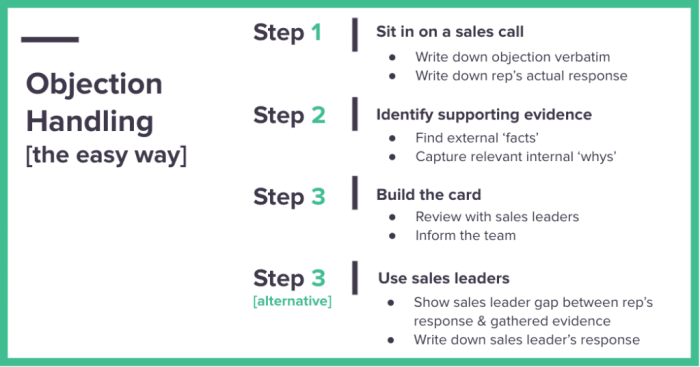
Successfully navigating sales objections is not about avoiding difficult conversations; it’s about mastering the art of effective communication and building trust. By proactively addressing concerns, employing empathetic responses, and reframing objections as opportunities to highlight value, you can significantly improve your sales performance. Remember, every objection is a chance to deepen your understanding of the customer’s needs and demonstrate the unique benefits of your product or service. Embrace these challenges, and watch your sales success soar.