Navigating the ever-evolving professional landscape requires a proactive and strategic approach to personal growth. This guide unveils nine effective methods for managing your professional development, empowering you to cultivate valuable skills, build meaningful connections, and achieve your career aspirations. We’ll explore practical strategies for identifying skill gaps, crafting personalized learning plans, leveraging networking opportunities, and setting impactful goals to drive continuous improvement.
From mastering the art of effective mentorship to harnessing the power of constructive feedback, we’ll equip you with the tools and techniques necessary to thrive in your chosen field. This comprehensive approach emphasizes a holistic view of professional development, acknowledging the interconnectedness of skill acquisition, relationship building, and goal attainment.
Skill Enhancement & Acquisition

Professional development is a continuous journey, and a crucial aspect of this journey is the enhancement and acquisition of new skills. Staying relevant in today’s dynamic professional landscape requires a proactive approach to identifying skill gaps and actively pursuing opportunities for growth. This section will explore effective strategies for identifying areas needing improvement, acquiring in-demand skills, and showcasing proactive learning.
Identifying Skill Gaps
Understanding your skill gaps is the first step towards improvement. Three distinct methods can be employed to effectively identify areas where your skills fall short of professional expectations. These methods offer different perspectives and strengths, allowing for a comprehensive assessment.
| Method | Pros | Cons | Example |
|---|---|---|---|
| Self-Assessment | Easy, inexpensive, readily available; allows for introspection and honest self-evaluation. | Can be subjective and biased; may miss blind spots; relies on accurate self-awareness. | Reflecting on recent projects, identifying tasks that felt challenging or required significant extra effort. Using a skills matrix to compare your self-rated abilities against desired competencies. |
| 360-Degree Feedback | Provides a holistic view from multiple perspectives (managers, peers, subordinates); offers unbiased insights into strengths and weaknesses. | Can be time-consuming and resource-intensive to implement; requires careful management to avoid negative feedback impacting morale. | Gathering feedback from colleagues, supervisors, and clients through surveys or structured interviews. Analyzing the aggregated feedback to identify recurring themes and areas for improvement. |
| Skills Gap Analysis (using job descriptions) | Objective and data-driven; directly compares your skills to those required for advancement or target roles. | Requires access to relevant job descriptions; might overlook transferable skills or emerging trends. | Comparing your skills and experience listed on your resume to the required skills listed in job descriptions for your desired positions. Identifying discrepancies reveals specific skill gaps. |
Acquiring a New, In-Demand Skill: Data Analysis
Let’s Artikel a plan for acquiring data analysis skills, a highly sought-after skill in many industries.
Skill: Data Analysis using Python and SQL
Resources: Online courses (Coursera, edX, DataCamp), books (“Python for Data Analysis” by Wes McKinney, “SQL for Dummies”), online tutorials (YouTube channels focused on data science), and potentially a mentorship program through a professional organization.
Timeline: 6 months
Milestones:
- Month 1-2: Learn Python fundamentals and data structures. Complete a beginner Python course and build small projects.
- Month 3-4: Master SQL basics, focusing on data retrieval and manipulation. Complete a beginner SQL course and practice querying a database.
- Month 5-6: Learn data analysis libraries in Python (Pandas, NumPy). Work on a personal data analysis project, such as analyzing a publicly available dataset (e.g., from Kaggle). Present findings in a clear and concise report.
Examples of Proactive Learning
Proactive learning demonstrates initiative and a commitment to professional growth. Examples include:
Attending industry conferences and workshops to stay updated on the latest trends and best practices. Taking online courses related to emerging technologies in your field. Seeking out mentorship opportunities from experienced professionals in your organization or industry. Initiating projects that allow you to apply and expand your existing skill set. Actively participating in professional communities and forums, contributing knowledge and learning from peers.
Personalized Learning Plan
A personalized learning plan should integrate various methods for optimal effectiveness. For example:
Goal: Improve communication and presentation skills
Activities:
- Online Course: Enroll in a Coursera course on public speaking and presentation skills.
- Workshop: Attend a local workshop on effective communication techniques.
- Mentorship: Seek mentorship from a senior colleague known for their excellent communication skills, requesting feedback on presentations and communication style.
Networking & Mentorship
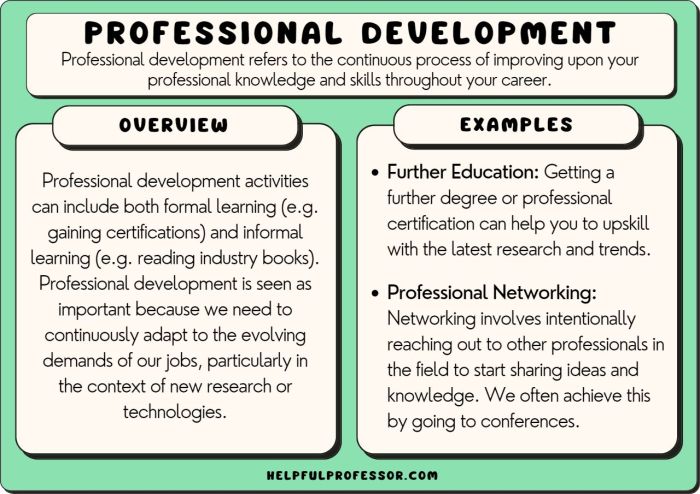
Networking and mentorship are crucial components of successful professional development. Building strong professional relationships can unlock opportunities for growth, learning, and advancement that might otherwise be inaccessible. Mentorship, in particular, provides invaluable guidance and support, accelerating the learning curve and fostering a deeper understanding of the industry landscape.
Networking within your industry offers numerous benefits. For instance, attending industry conferences can lead to collaborations with peers, generating innovative ideas and potentially leading to joint projects. These connections can also open doors to new job opportunities, often through informal referrals. Consider a software engineer who attends a tech conference and connects with a recruiter from a leading tech firm; this connection, born from networking, could result in a significant career advancement. Similarly, participating in online forums and groups related to your field allows you to engage with experts, learn about emerging trends, and even find potential clients or collaborators. A graphic designer actively participating in online design communities could gain valuable feedback on their work, leading to improvements and attracting new clients.
Strategies for Building and Maintaining Professional Relationships
Building and maintaining professional relationships requires a proactive and consistent approach. Offline networking involves attending industry events, joining professional organizations, and participating in workshops. Online networking leverages platforms like LinkedIn, professional forums, and online communities. Maintaining relationships requires consistent engagement; this could involve sending occasional informative articles relevant to a contact’s field, offering help when appropriate, or simply connecting on a personal level (while remaining professional). Regular follow-ups after initial meetings are essential to solidifying new connections. A consistent and genuine effort to nurture these relationships is key to their longevity and effectiveness.
Identifying and Approaching Potential Mentors
Identifying and approaching potential mentors is a structured process. First, identify individuals in your field who have achieved the level of success you aspire to. Research their career paths and accomplishments. Next, seek opportunities to connect with them – this could be through attending events they speak at, joining organizations they are involved in, or reaching out directly via email or LinkedIn, outlining your interests and aspirations, and respectfully requesting a brief informational interview. Finally, be prepared to demonstrate your initiative and commitment to learning; showing a proactive approach will significantly increase your chances of securing mentorship. Remember to respect their time and be mindful of their professional commitments.
Comparison of Mentorship Styles
Different mentorship styles offer varying levels of support and guidance. The effectiveness of each style depends on the mentee’s personality and learning style.
- Formal Mentorship: This structured approach often involves a formal agreement with specific goals and regular meetings. It provides a clear framework for development, but can sometimes feel less organic and flexible.
- Informal Mentorship: This less structured approach develops organically through regular interaction and shared experiences. It allows for greater flexibility and spontaneity but might lack the clear direction of a formal mentorship.
- Reverse Mentorship: In this style, a younger individual mentors a more experienced one, often on topics like technology or social media. This provides a valuable opportunity for both parties to learn and grow.
- Group Mentorship: This involves a mentor guiding a group of mentees, allowing for peer learning and collaborative problem-solving. It can be cost-effective and provide a broader range of perspectives.
Goal Setting & Performance Improvement
Effective goal setting and consistent performance improvement are crucial for sustained professional development. By setting achievable goals, tracking progress, and actively seeking feedback, professionals can identify areas for growth and enhance their skills and expertise. This section Artikels a structured approach to achieving these objectives.
SMART Goals for Professional Development
Establishing SMART (Specific, Measurable, Achievable, Relevant, Time-bound) goals provides a clear roadmap for professional growth. Here are three examples of SMART goals for the next year:
- Goal 1: Improve Public Speaking Skills – Deliver three presentations at industry events by December 2024. This involves identifying relevant events, submitting proposals, practicing presentations, and seeking feedback on delivery.
- Goal 2: Enhance Technical Proficiency in Python – Complete a certified Python programming course and build two personal projects demonstrating proficiency in data analysis by June 2024. This involves researching courses, enrolling, dedicating time for study, and actively building projects.
- Goal 3: Expand Professional Network – Connect with five senior professionals in my field via LinkedIn and attend two networking events by September 2024. This involves researching professionals, crafting personalized connection requests, actively participating in events, and following up after networking opportunities.
Progress Tracking and Adjustment
Regularly monitoring progress towards goals is vital. This involves creating a tracking system – a spreadsheet, project management software, or even a simple journal – to record achievements, challenges, and milestones. For example, for Goal 1, one could track presentation proposal submissions, rehearsal dates, and feedback received after each presentation. Adjustments are made based on this tracking; if a presentation proposal is rejected, research alternative events. If progress is slower than anticipated, additional practice time or mentoring support might be needed. Regular review (monthly or quarterly) allows for timely course correction.
Performance Metrics and Self-Assessment
Performance metrics provide quantifiable measures of progress. For Goal 2 (Python proficiency), metrics could include the number of coding hours dedicated to learning, the completion percentage of the course, and the functionality of the two personal projects. Self-assessment involves critically evaluating performance against these metrics. For example, if the projects are not meeting expectations, identifying specific areas for improvement (e.g., debugging skills) and seeking additional resources or mentorship becomes necessary. For Goal 3, the number of connections made, the quality of interactions, and the number of events attended would serve as key metrics.
Seeking and Incorporating Constructive Feedback
Actively seeking feedback is critical for identifying areas for improvement. A structured plan can ensure feedback is effectively sought and integrated.
- Identify Feedback Sources: Identify individuals who can provide valuable feedback, such as supervisors, colleagues, mentors, or clients.
- Request Specific Feedback: Clearly articulate the areas where you seek feedback and the type of feedback you’re looking for (e.g., constructive criticism, suggestions for improvement).
- Schedule Feedback Sessions: Schedule dedicated time to receive and discuss feedback, allowing for open dialogue and clarification.
- Document Feedback: Record the feedback received to facilitate reflection and action planning.
- Develop an Action Plan: Based on the feedback received, develop a plan outlining specific steps to address areas for improvement.
- Follow Up: After implementing changes, seek follow-up feedback to assess the effectiveness of the adjustments made.
Closing Summary
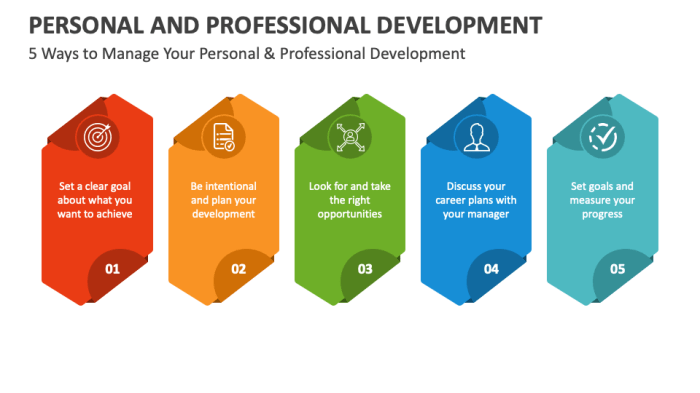
Ultimately, successful professional development is a journey of continuous learning, adaptation, and self-reflection. By implementing the strategies Artikeld in this guide—from targeted skill enhancement to strategic networking and goal-oriented performance improvement—you can cultivate a fulfilling and rewarding career trajectory. Remember that consistent effort, coupled with a proactive mindset, will unlock your full potential and propel you toward achieving your professional ambitions. Embrace the process, celebrate your achievements, and never stop learning.