Navigating the complexities of human emotion can feel like traversing a turbulent sea. We experience a vast spectrum of feelings—from joy and excitement to sadness and anger—and learning to manage these emotions effectively is crucial for our overall well-being. This guide offers seven practical strategies to help you understand, cope with, and ultimately thrive amidst the emotional landscape of daily life. Understanding the root causes of your emotional responses is the first step towards achieving greater emotional control and building resilience.
By exploring techniques like mindfulness, self-compassion, and developing healthy coping mechanisms, you’ll gain valuable tools to navigate challenging situations with greater ease and emotional intelligence. This journey of self-discovery will empower you to foster healthier relationships, improve your decision-making abilities, and ultimately lead a more fulfilling life.
Understanding Your Emotions
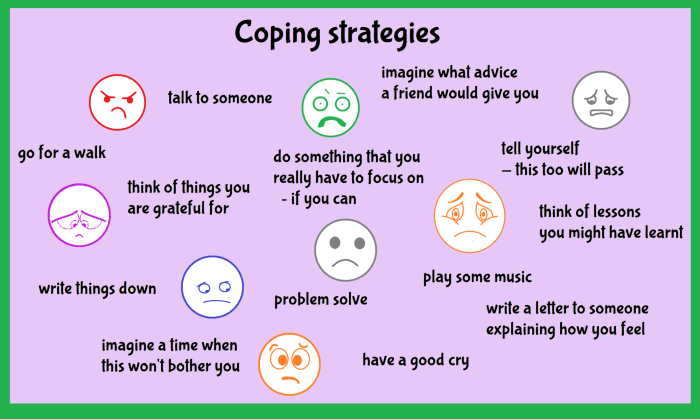
Managing your emotions effectively begins with a deep understanding of what they are and how they manifest. This involves recognizing the physical sensations, thought patterns, and triggers that contribute to your emotional experiences. By understanding these components, you can develop strategies to better regulate your emotional responses and improve your overall well-being.
Physiological Responses to Emotions
Different emotions trigger distinct physiological responses within the body. For example, fear might manifest as a racing heart, rapid breathing, and sweating, preparing the body for “fight or flight.” Anger, on the other hand, might lead to increased blood pressure and muscle tension. Sadness often involves slowed heart rate, fatigue, and a feeling of heaviness. These physical sensations are crucial indicators of our emotional state, providing valuable feedback that we can learn to interpret. Understanding these physiological cues allows us to recognize the onset of an emotion before it escalates.
Cognitive Processes and Emotional Experiences
Our thoughts and interpretations significantly influence our emotional experiences. The same event can evoke different emotions in different people, depending on their individual perspectives and beliefs. For example, receiving constructive criticism might be perceived as helpful and motivating by someone with a growth mindset, but as a personal attack by someone with a fixed mindset. This illustrates how our cognitive appraisal – the way we think about and interpret an event – directly impacts our emotional response. Negative thought patterns, such as catastrophizing or overgeneralization, can amplify negative emotions, while positive self-talk and realistic assessments can help mitigate them.
Common Emotional Triggers and Their Impact
Numerous factors can trigger emotional responses. Stressful life events, such as job loss or relationship problems, are common triggers for anxiety and sadness. Social interactions, including conflicts or criticism, can evoke anger or hurt feelings. Even seemingly minor events, like traffic jams or unexpected delays, can contribute to frustration and irritability. Understanding your personal triggers – the situations, people, or thoughts that consistently evoke strong emotional reactions – is essential for developing effective coping mechanisms. Recognizing these patterns allows for proactive strategies to manage your emotional responses before they become overwhelming.
Comparing Emotional Regulation Techniques
| Technique | Description | Advantages | Disadvantages |
|---|---|---|---|
| Mindfulness | Paying attention to the present moment without judgment. | Reduces stress, improves self-awareness. | Requires practice and commitment. |
| Cognitive Restructuring | Identifying and challenging negative thought patterns. | Changes negative emotional responses to more balanced ones. | Can be challenging to identify and change deeply ingrained thought patterns. |
| Deep Breathing Exercises | Slow, deep breaths to calm the nervous system. | Quick and easy to implement, reduces physiological arousal. | May not be effective for all situations or individuals. |
| Progressive Muscle Relaxation | Systematically tensing and releasing muscle groups. | Reduces muscle tension and promotes relaxation. | Requires time and focused attention. |
Developing Effective Coping Mechanisms
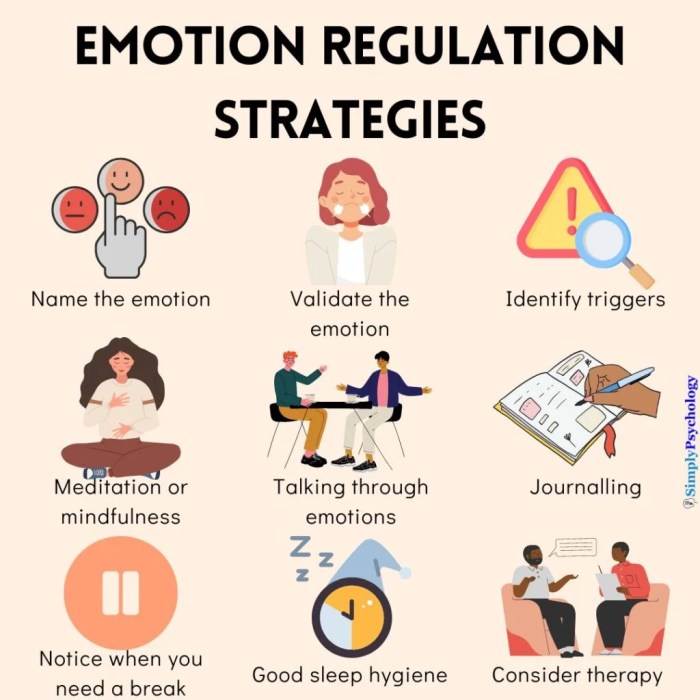
Developing effective coping mechanisms is crucial for navigating the inevitable emotional ups and downs of life. Learning to manage stress, anxiety, and other difficult emotions proactively can significantly improve your overall well-being and resilience. This section explores practical strategies to help you build a personalized toolkit for emotional regulation.
Identifying and Labeling Emotions Accurately
Accurately identifying and labeling your emotions is the first step towards effective management. This involves paying close attention to your physical sensations, thoughts, and behaviors associated with specific emotional states. For example, feelings of tightness in your chest, rapid heartbeat, and shortness of breath might indicate anxiety, while a feeling of emptiness in your stomach and a lack of motivation could signal depression. Keeping a journal to record your emotional experiences, including the triggers and associated physical sensations, can be invaluable in this process. Learning a broader emotional vocabulary beyond simple terms like “good” or “bad” allows for more nuanced understanding and targeted responses. For instance, instead of “angry,” you might identify your feeling as “irritated,” “frustrated,” or “furious,” which provides a more precise understanding of the intensity and nature of the emotion.
Personalized Stress and Anxiety Management Plan
A personalized plan for managing stress and anxiety should incorporate a variety of techniques tailored to your individual needs and preferences. This might include regular exercise, sufficient sleep, a balanced diet, limiting caffeine and alcohol intake, and engaging in enjoyable activities. Time management techniques, such as prioritizing tasks and setting realistic goals, can also significantly reduce stress. Scheduling regular breaks throughout the day and incorporating relaxation techniques into your routine are also beneficial. Furthermore, seeking professional help from a therapist or counselor can provide additional support and guidance in developing and implementing an effective plan. A sample plan might involve 30 minutes of exercise three times a week, meditation for 10 minutes daily, and scheduling a weekly “me-time” activity.
Mindfulness and Meditation for Emotional Well-being
Mindfulness and meditation practices cultivate present moment awareness, allowing you to observe your thoughts and emotions without judgment. This non-reactive approach can help reduce the intensity of negative emotions and improve emotional regulation. Regular practice can lead to increased self-awareness, improved focus, and a greater sense of calm. Studies have shown that mindfulness-based interventions are effective in reducing stress, anxiety, and depression. For example, a study published in JAMA Internal Medicine found that mindfulness meditation reduced symptoms of depression and anxiety in participants. Various guided meditation apps and online resources can provide support for beginners.
Utilizing Deep Breathing Exercises to Reduce Emotional Intensity
Deep breathing exercises are a simple yet powerful technique for managing emotional intensity. Slow, deep breaths activate the parasympathetic nervous system, which helps calm the body and reduce the physiological responses associated with stress and anxiety. Techniques such as diaphragmatic breathing (belly breathing) involve inhaling deeply into your abdomen, holding for a few seconds, and exhaling slowly. Practicing deep breathing regularly, even for a few minutes each day, can significantly reduce stress and improve emotional regulation. For example, during a stressful situation, taking several slow, deep breaths can help to center yourself and regain composure.
Healthy Coping Mechanisms for Various Emotional States
Developing a repertoire of healthy coping mechanisms is essential for managing a wide range of emotions. The effectiveness of a coping mechanism will vary depending on the individual and the specific emotional state.
- For Stress: Exercise, spending time in nature, listening to calming music, engaging in hobbies, practicing yoga or tai chi.
- For Anxiety: Deep breathing exercises, progressive muscle relaxation, mindfulness meditation, journaling, seeking social support.
- For Sadness: Engaging in self-care activities, connecting with loved ones, expressing emotions through creative outlets (art, writing, music), seeking professional help if needed.
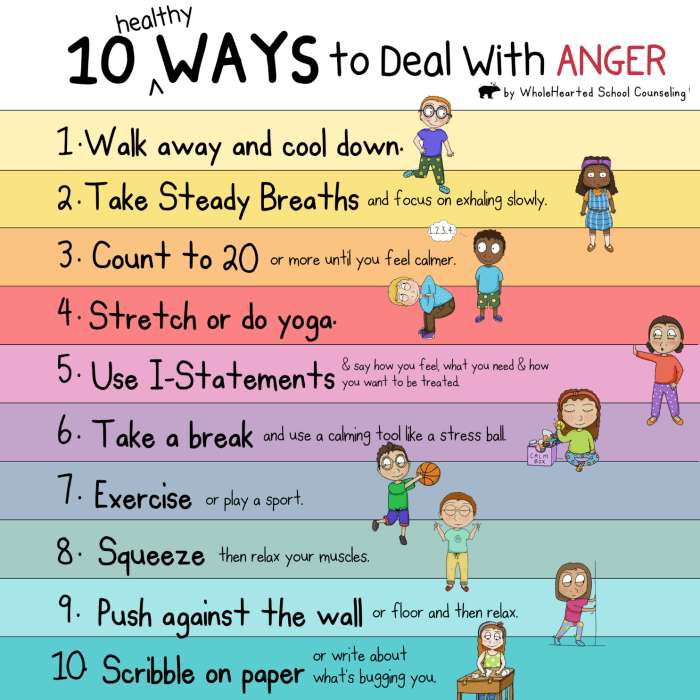
- For Anger: Identifying triggers, practicing assertive communication, engaging in physical activity, taking a break to calm down before responding.
Building Resilience and Self-Compassion
Building resilience and self-compassion are crucial for effective emotional management. These qualities allow us to navigate challenging situations with greater ease and to recover more quickly from setbacks. By cultivating self-awareness, identifying personal strengths, and practicing self-compassion, we can significantly improve our ability to regulate our emotions and build a stronger sense of well-being.
The Importance of Self-Awareness in Emotional Regulation
Self-awareness is the cornerstone of emotional regulation. Understanding your own emotional landscape – recognizing your triggers, identifying your emotional responses, and acknowledging the physical sensations associated with different emotions – is the first step towards managing them effectively. Without this awareness, we react instinctively, often leading to impulsive behaviors and heightened emotional distress. Regular self-reflection, journaling, and mindfulness practices can significantly enhance self-awareness, allowing for more conscious and thoughtful responses to challenging situations.
Identifying Personal Strengths and Resources for Overcoming Emotional Challenges
Everyone possesses unique strengths and resources that can be leveraged to overcome emotional challenges. These might include strong support networks, problem-solving skills, creative outlets, or a history of successfully navigating difficult situations. Identifying these strengths empowers us to approach challenges with confidence and a sense of agency. For example, someone who excels at problem-solving might use that skill to tackle the root causes of their emotional distress, while someone with a strong support network can leverage those relationships for emotional support and guidance.
Examples of Self-Compassionate Statements to Counteract Negative Self-Talk
Negative self-talk can significantly undermine emotional resilience. Replacing self-criticism with self-compassionate statements can be transformative. Instead of saying, “I’m such a failure,” try, “This is difficult, but I’m doing the best I can.” Instead of “I’m so stupid,” consider, “I made a mistake, and I can learn from it.” These self-compassionate statements acknowledge imperfections without judgment, fostering a sense of kindness and understanding towards oneself. Regular practice helps rewire negative thought patterns and cultivate a more supportive inner dialogue.
A Visualization Exercise to Promote Emotional Resilience
Close your eyes and imagine yourself standing on a tranquil beach. Feel the warm sun on your skin and the gentle breeze in your hair. The waves are rolling in, each one representing a challenge or difficult emotion. As each wave approaches, instead of being overwhelmed, you observe it with curiosity. You notice its power, its rhythm, and then you watch it recede, taking the emotion with it. With each wave, you feel a sense of calm and strength growing within you. You are grounded, centered, and able to weather any storm. You are resilient. Now, bring this feeling of calm and strength with you as you open your eyes.
Comparing and Contrasting Different Approaches to Building Self-Esteem and Self-Acceptance
| Self-Esteem | Self-Acceptance |
|---|---|
| Based on external validation and accomplishments. | Based on inherent worth and unconditional self-love. |
| Can be fragile and fluctuate depending on external factors. | More stable and resilient to external pressures. |
| Often involves striving for perfection and avoiding failure. | Embraces imperfections and sees them as part of the human experience. |
| May lead to comparison with others and feelings of inadequacy. | Promotes self-compassion and a non-judgmental attitude towards oneself. |
Ultimate Conclusion
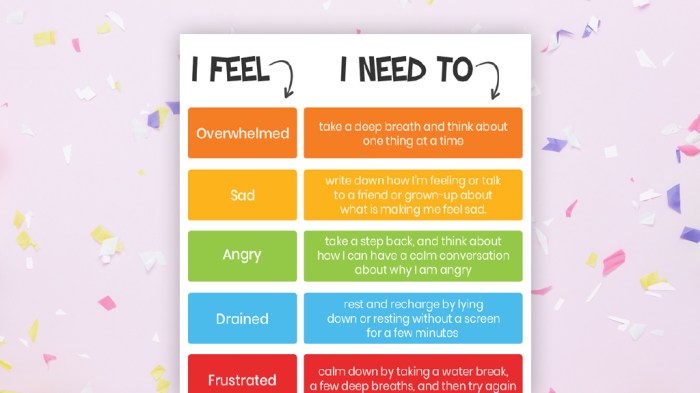
Mastering your emotions isn’t about suppressing feelings; it’s about developing the skills to understand, process, and respond to them in a healthy and constructive way. By implementing the strategies Artikeld—from understanding your emotional responses to cultivating self-compassion—you’ll equip yourself with the tools to navigate life’s challenges with greater resilience and emotional intelligence. Remember, consistent practice is key to building lasting emotional well-being. Embrace this journey of self-discovery and unlock your potential for a more balanced and fulfilling life.