In today’s fast-paced world, effective time management is no longer a luxury but a necessity. Successfully navigating the demands of work, personal life, and everything in between hinges on our ability to prioritize, organize, and execute tasks efficiently. This guide provides five essential steps to help you regain control of your time and boost your productivity, leading to a more balanced and fulfilling life.
We’ll explore practical strategies for planning and prioritizing tasks, utilizing time-blocking techniques, minimizing distractions, and conquering procrastination. By implementing these steps, you’ll not only increase your efficiency but also reduce stress and improve your overall well-being. The journey to mastering time management is a continuous process, and this guide serves as your roadmap to success.
Planning and Prioritization

Effective time management hinges on strategically planning your activities and prioritizing tasks. This involves understanding your workload, allocating time efficiently, and focusing your energy on what truly matters. A well-structured approach to planning and prioritization minimizes wasted time and maximizes productivity.
Daily Scheduling
Creating a daily schedule provides a clear roadmap for your day. This structured approach ensures you allocate sufficient time for each task and prevents feeling overwhelmed. A simple table can be incredibly effective.
| Time | Task | Priority | Estimated Time |
|---|---|---|---|
| 9:00 AM – 10:00 AM | Respond to emails | High | 60 minutes |
| 10:00 AM – 12:00 PM | Complete project proposal | High | 120 minutes |
| 12:00 PM – 1:00 PM | Lunch | Medium | 60 minutes |
| 1:00 PM – 3:00 PM | Team meeting | High | 120 minutes |
| 3:00 PM – 4:00 PM | Review project progress | Medium | 60 minutes |
| 4:00 PM – 5:00 PM | Plan for tomorrow | Low | 60 minutes |
Weekly Planning System
A weekly planning system integrates both personal and professional commitments, offering a broader perspective on your time allocation. This holistic approach helps you balance work, personal life, and other responsibilities effectively, preventing burnout and improving overall well-being. Consider using a digital calendar or a physical planner to track appointments, deadlines, and personal events. Color-coding can be useful for distinguishing between work and personal activities. For example, blue for work-related tasks, green for personal appointments, and orange for errands.
The Eisenhower Matrix
The Eisenhower Matrix, also known as the Urgent/Important Matrix, is a powerful tool for prioritizing tasks based on their urgency and importance. It categorizes tasks into four quadrants:
| Urgent | Not Urgent | |
|---|---|---|
| Important | Quadrant 1: Do First | Quadrant 2: Schedule |
| Not Important | Quadrant 3: Delegate | Quadrant 4: Eliminate |
Prioritizing tasks using the Eisenhower Matrix helps focus on high-impact activities while delegating or eliminating less important ones.
For example, an urgent and important task might be addressing a critical client issue. A not urgent but important task could be planning for a long-term project. An urgent but not important task might be responding to a non-critical email, while a not urgent and not important task could be browsing social media.
Identifying and Eliminating Time-Wasting Activities
Identifying and eliminating time-wasting activities is crucial for improved productivity. This involves tracking your daily activities to pinpoint areas where time is being inefficiently used. Common time-wasters include excessive social media use, unproductive meetings, and multitasking. Strategies for eliminating these include setting time limits for social media, preparing agendas for meetings, and focusing on one task at a time. Regularly reviewing your time usage and adjusting your strategies as needed ensures continued improvement.
Time Blocking and Task Management

Effective time management hinges on not just planning, but also on executing those plans efficiently. This involves strategically allocating your time and managing your tasks in a way that maximizes productivity and minimizes stress. Time blocking and robust task management are key components of this process.
Time blocking involves scheduling specific tasks within designated time slots in your day. This approach provides structure and encourages focused work, reducing the likelihood of task-switching and associated cognitive overhead. Task management, on the other hand, encompasses the processes of identifying, prioritizing, organizing, and tracking your tasks to ensure completion. Effective task management often involves breaking down large projects into smaller, more manageable components.
Breaking Down Large Tasks
Breaking down large tasks into smaller, more manageable sub-tasks is crucial for maintaining momentum and preventing feelings of overwhelm. A large project can seem daunting, but by dividing it into smaller, more achievable steps, the overall goal becomes less intimidating. For example, writing a 10-page research paper can be broken down into tasks such as researching the topic, creating an Artikel, writing individual sections, editing, and proofreading. Each of these smaller tasks can then be assigned specific time blocks. This approach makes progress more visible and provides a sense of accomplishment as each sub-task is completed.
The Pomodoro Technique
The Pomodoro Technique is a time management method that utilizes focused work intervals interspersed with short breaks. It typically involves working in 25-minute intervals (Pomodoros) followed by a 5-minute break. After four Pomodoros, a longer break of 15-20 minutes is recommended. The technique leverages the benefits of focused attention and regular rest periods to enhance concentration and prevent burnout. While effective for many, potential drawbacks include the rigidity of the structure, which might not suit all work styles or tasks, and the potential for interruptions to disrupt the flow. For instance, a complex coding task might require longer uninterrupted periods than a 25-minute Pomodoro allows.
Task Management Tools
Several task management tools are available, each with unique functionalities to suit different needs and preferences. Popular options include Trello, Asana, Todoist, and Microsoft To Do. Trello uses a Kanban-style board for visualizing workflows, Asana provides more advanced project management features including team collaboration tools, Todoist focuses on individual task management with features like natural language processing, and Microsoft To Do integrates seamlessly with other Microsoft products. The choice of tool depends on individual needs and the complexity of tasks being managed. For example, a freelancer might find Todoist sufficient, while a team working on a complex project would benefit from Asana’s collaborative features.
Minimizing Distractions and Procrastination
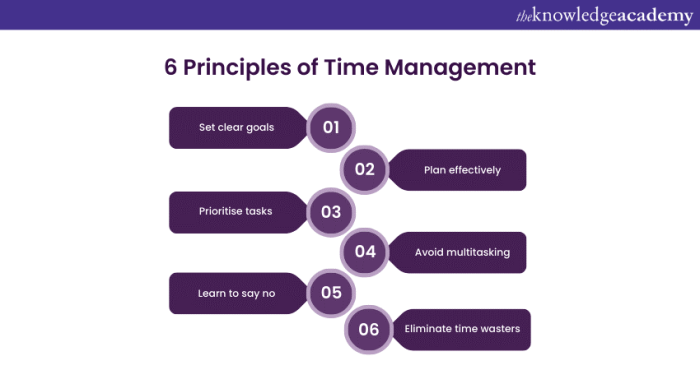
Effective time management hinges not only on planning and scheduling but also on actively minimizing distractions and overcoming procrastination. These insidious time-wasters can significantly derail even the most meticulously crafted schedules, rendering our efforts unproductive. Addressing these challenges is crucial for achieving consistent progress and maximizing our output.
Effective strategies for minimizing distractions and procrastination involve understanding their sources, creating a supportive environment, and employing specific behavioral techniques. This section explores practical methods to conquer these productivity roadblocks.
Common Sources of Distractions and Mitigation Techniques
Distractions are ubiquitous in our modern lives. They stem from both internal and external sources, ranging from the constant pings of notifications to our own wandering thoughts. Understanding these sources is the first step towards mitigating their impact.
- Technological Distractions: Notifications from smartphones, emails, social media, and instant messaging applications are significant culprits. Actively managing these distractions through techniques like turning off notifications during focused work periods, utilizing website blockers, and scheduling specific times for checking emails and social media can significantly improve concentration.
- Environmental Distractions: Noise, clutter, uncomfortable temperatures, and interruptions from colleagues or family members can disrupt focus. Creating a dedicated workspace, utilizing noise-canceling headphones, and communicating boundaries with others are effective strategies to minimize environmental distractions.
- Internal Distractions: These include mind-wandering, daydreaming, and worrying. Mindfulness techniques, such as meditation or deep breathing exercises, can help to regain focus and redirect attention back to the task at hand. Breaking down large tasks into smaller, more manageable chunks can also reduce feelings of overwhelm and prevent mental wandering.
Designing a Focus-Conducive Workspace
The physical environment plays a critical role in productivity. A well-designed workspace promotes concentration and minimizes distractions.
- Dedicated Space: Having a designated area solely for work, free from clutter and other distractions, is crucial. This space should be organized and well-lit, fostering a sense of calm and focus.
- Ergonomics: A comfortable and ergonomically sound workspace is essential for sustained concentration. This includes a comfortable chair, proper desk height, and appropriate lighting to minimize eye strain.
- Minimal Clutter: A clean and organized workspace reduces visual distractions and promotes a sense of calm. Regularly decluttering the area can significantly improve focus.
- Ambient Sounds: Consider using calming background music or white noise to mask distracting sounds from the environment. However, avoid music with lyrics, which can be distracting.
Step-by-Step Guide to Overcome Procrastination
Procrastination is a common productivity killer. It often stems from fear of failure, perfectionism, or feeling overwhelmed. Employing specific behavioral strategies can help break the cycle of procrastination.
- Identify the Root Cause: Understanding *why* you are procrastinating is the first step. Are you afraid of failure? Overwhelmed by the task? Identifying the underlying cause allows for targeted intervention.
- Break Down Tasks: Large, daunting tasks can be paralyzing. Break them down into smaller, more manageable sub-tasks. This makes the overall project less intimidating and provides a sense of accomplishment as each sub-task is completed.
- Timeboxing: Allocate specific time blocks for working on the task, even if it’s just for 15 minutes. This creates a sense of urgency and makes it easier to start. The Pomodoro Technique (25 minutes of focused work followed by a 5-minute break) is a popular example.
- Eliminate Distractions: Before starting work, actively minimize distractions by turning off notifications, putting away your phone, and creating a quiet workspace.
- Reward Yourself: Celebrate your accomplishments, no matter how small. Rewarding yourself reinforces positive behavior and motivates you to continue working.
Impact of Technology on Productivity and Strategies for Responsible Technology Use
Technology is a double-edged sword. While it offers incredible productivity tools, it can also be a major source of distraction. Responsible technology use is key to harnessing its benefits without succumbing to its pitfalls.
- Utilize Productivity Apps: Numerous apps are designed to enhance productivity, such as task management tools, calendar apps, and website blockers. Selecting and effectively using these tools can significantly improve efficiency.
- Set Boundaries: Establish clear boundaries for technology use. Schedule specific times for checking emails and social media, and resist the urge to constantly check notifications outside of these designated periods.
- Digital Detox: Regularly disconnecting from technology can help to reduce stress and improve focus. Scheduling periodic “digital detox” periods can be beneficial for overall well-being and productivity.
Outcome Summary
Mastering time management is a journey, not a destination. By consistently applying these five essential steps – planning and prioritization, time blocking, minimizing distractions, conquering procrastination, and continuous evaluation – you’ll cultivate a more productive and fulfilling life. Remember, the key lies in consistent effort and adapting these strategies to your unique needs and circumstances. Embrace the process, and watch your efficiency and well-being flourish.