Workplace conflict is inevitable, but its impact needn’t be destructive. This guide explores nine practical strategies for both preventing and resolving disagreements, fostering a more productive and harmonious work environment. We’ll delve into proactive techniques, reactive solutions, and the importance of understanding different conflict styles to navigate challenges effectively and build stronger professional relationships.
From identifying your own conflict resolution style to implementing clear communication protocols, we’ll equip you with the tools to tackle conflict head-on. Learning to manage conflict constructively is not just about resolving immediate issues; it’s about creating a culture of respect and collaboration that benefits everyone involved.
Understanding Conflict Styles

Effective conflict management hinges on understanding the different approaches individuals adopt when disagreements arise. Recognizing these styles allows for more strategic and productive conflict resolution. Different styles are appropriate for different situations, and understanding them helps in choosing the most effective approach for a given workplace scenario.
Five Common Conflict Styles
Individuals tend to favor particular conflict styles, although they may adapt their approach depending on the situation and the people involved. Understanding these styles helps in predicting how others might react and in choosing a corresponding response.
| Conflict Style | Description | Strengths | Weaknesses |
|---|---|---|---|
| Avoiding | Ignoring the conflict or withdrawing from the situation. | Preserves relationships in the short-term, buys time for reflection. | Problem remains unresolved, can escalate if ignored, may be perceived as uncaring or weak. |
| Accommodating | Prioritizing the other party’s needs over one’s own. | Maintains harmony, builds goodwill, can be effective when the issue is less important than the relationship. | Can lead to resentment, may not address the root cause of the conflict, can be exploited by others. |
| Competing | Pursuing one’s own interests aggressively, regardless of the other party’s needs. | Can be effective in emergencies or when quick decisions are needed. | Damages relationships, can create resentment and hostility, may not lead to a lasting solution. |
| Compromising | Finding a mutually acceptable solution where both parties make concessions. | Fair and equitable, maintains relationships, can be a quick solution. | May not fully address the needs of either party, can lead to suboptimal outcomes. |
| Collaborating | Working together to find a solution that satisfies both parties’ needs. | Leads to creative solutions, strengthens relationships, addresses the root cause of the conflict. | Time-consuming, requires effort and commitment from both parties, may not be feasible in all situations. |
Assertive, Collaborative, and Accommodating Approaches Compared
The assertive, collaborative, and accommodating approaches represent distinct strategies within the broader spectrum of conflict styles. While they share some similarities, their core differences significantly impact outcomes.
Assertive approaches prioritize expressing one’s own needs and perspectives directly and respectfully. This contrasts with accommodating, which prioritizes the other party’s needs above one’s own, potentially at the expense of personal satisfaction. Collaboration seeks a win-win solution, requiring open communication and mutual respect to find common ground that satisfies both parties’ interests. An assertive approach, when used effectively, can ensure that one’s needs are heard and considered, but without necessarily seeking to dominate or disregard the other person’s perspective. Accommodating, while valuable in certain contexts (such as preserving a relationship when the issue is minor), can lead to resentment if consistently employed. Collaboration, though ideal, demands significant time and effort, making it less practical in every situation.
Proactive Conflict Management Strategies

Proactive conflict management focuses on preventing disputes before they arise, saving time, resources, and improving overall workplace harmony. By implementing preventative measures, organizations can foster a more positive and productive environment. This approach emphasizes building strong foundations for communication and collaboration, minimizing the potential for misunderstandings and disagreements.
Preventing workplace conflicts requires a multi-faceted approach that addresses potential triggers and cultivates a culture of respect and understanding. Ignoring early warning signs can lead to larger, more complex conflicts that are significantly more difficult to resolve. A proactive strategy is therefore crucial for maintaining a healthy and productive work environment.
Clear Communication and Expectations in Conflict Prevention
Clear communication and well-defined expectations are cornerstones of effective conflict prevention. Ambiguity and misinterpretations are common sources of workplace disputes. When individuals understand their roles, responsibilities, and the expectations of their colleagues and supervisors, the likelihood of misunderstandings diminishes significantly. This clarity reduces the chances of conflicting interpretations of tasks, deadlines, or company policies, thereby preventing potential conflict. For example, a clearly defined project scope with allocated responsibilities prevents disagreements over who is accountable for specific deliverables. Similarly, transparent performance expectations help avoid conflicts arising from differing perceptions of performance standards.
Three Practical Strategies for Preventing Workplace Conflicts
Implementing clear communication protocols and fostering a culture of open dialogue are vital for conflict prevention. Here are three practical strategies:
- Regular Team Meetings: Scheduled team meetings provide a platform for open communication, allowing team members to discuss project updates, address concerns, and proactively identify potential issues before they escalate. These meetings should foster a safe and inclusive environment where individuals feel comfortable expressing their opinions and concerns without fear of reprisal.
- Well-Defined Roles and Responsibilities: Clearly defined roles and responsibilities minimize ambiguity and prevent overlapping tasks or conflicting priorities. A well-structured organizational chart and job descriptions that clearly Artikel expectations and responsibilities can significantly reduce the likelihood of conflict arising from unclear roles. This also ensures accountability and prevents misunderstandings regarding who is responsible for specific tasks or decisions.
- Open-Door Policy and Feedback Mechanisms: Establishing an open-door policy, coupled with formal and informal feedback mechanisms, allows employees to voice their concerns and seek clarification without resorting to conflict. Regular performance reviews and 360-degree feedback processes provide opportunities for open communication and early identification of potential issues. This proactive approach allows for timely intervention and prevents minor disagreements from escalating into major conflicts.
Establishing Effective Communication Protocols
Effective communication protocols are crucial for minimizing misunderstandings and preventing conflicts. A step-by-step guide to establishing these protocols is essential for creating a more harmonious workplace.
- Define Communication Channels: Establish clear guidelines on which communication channels should be used for different types of communication. For instance, urgent matters may require immediate phone calls or instant messaging, while less urgent issues can be addressed through email or during scheduled meetings.
- Establish Response Time Expectations: Set reasonable expectations for response times to different communication methods. This ensures that individuals know when to expect a response and prevents misunderstandings caused by delays.
- Promote Active Listening and Clarification: Encourage active listening and clarification to ensure that messages are understood correctly. This includes paraphrasing to confirm understanding and asking clarifying questions to address any ambiguities.
- Document Important Communications: Maintain records of important communications, particularly those related to decisions, agreements, or commitments. This creates a clear audit trail and minimizes the risk of disputes arising from conflicting accounts of events.
- Regularly Review and Update Protocols: Communication protocols should be reviewed and updated regularly to ensure they remain relevant and effective. This involves gathering feedback from employees and adapting the protocols to meet the evolving needs of the organization.
Reactive Conflict Resolution Techniques

When conflicts arise, effective reactive strategies are crucial for minimizing damage and fostering positive working relationships. These techniques focus on addressing the conflict directly and finding mutually acceptable solutions once it has emerged. A prompt and well-managed response can significantly impact team morale and productivity.
Addressing conflicts effectively requires a structured approach, combining specific techniques with a foundation of strong communication skills. This section Artikels five effective techniques to resolve workplace conflicts that have already occurred.
Effective Reactive Conflict Resolution Techniques
Five effective techniques for resolving existing conflicts include: facilitation, negotiation, mediation, arbitration, and grievance procedures. Each approach offers a different level of formality and control, allowing for flexibility based on the severity and nature of the conflict.
- Facilitation: A neutral third party guides the conflicting parties toward a resolution by creating a safe space for open communication and problem-solving. The facilitator helps structure the discussion, ensuring all voices are heard and focusing on shared goals. For example, a team leader might facilitate a discussion between two team members who are disagreeing about project priorities.
- Negotiation: This involves direct communication between the conflicting parties to find a mutually acceptable compromise. Successful negotiation relies on active listening, understanding each party’s needs and interests, and a willingness to compromise. For instance, two departments might negotiate the allocation of shared resources to avoid conflict.
- Mediation: A neutral third party, the mediator, helps facilitate communication and guide the parties towards a solution. Unlike facilitation, mediation is more structured and involves a deeper exploration of underlying issues. A trained mediator might be brought in to resolve a significant disagreement between employees.
- Arbitration: In arbitration, a neutral third party hears evidence and arguments from both sides and makes a binding decision. This is often used when negotiation and mediation have failed to resolve the conflict. A common example is using arbitration to resolve a dispute over a contract.
- Grievance Procedures: Formal processes within an organization for addressing complaints and resolving disputes. These procedures typically involve a series of steps, including written complaints and appeals, and often involve HR representatives. For example, an employee might file a grievance if they believe they have been unfairly treated.
Active Listening and Empathy in Conflict Resolution
Active listening and empathy are foundational to successful conflict resolution. Active listening involves fully concentrating on what the other person is saying, understanding their perspective, and responding thoughtfully. Empathy means trying to understand the other person’s feelings and emotions, even if you don’t agree with their perspective. By demonstrating both active listening and empathy, you create a safe and respectful environment where open communication can flourish, leading to more productive conflict resolution.
Key Questions to Ask During Conflict Resolution
Asking the right questions is critical to understanding the perspectives of all involved parties. These questions help to uncover the root causes of the conflict and identify common ground for a resolution.
- What are your primary concerns regarding this situation?
- Can you describe the events that led to this conflict from your point of view?
- What are your desired outcomes from this discussion?
- What are your perceived needs and interests in this situation?
- What steps do you believe would help to resolve this conflict?
Summary
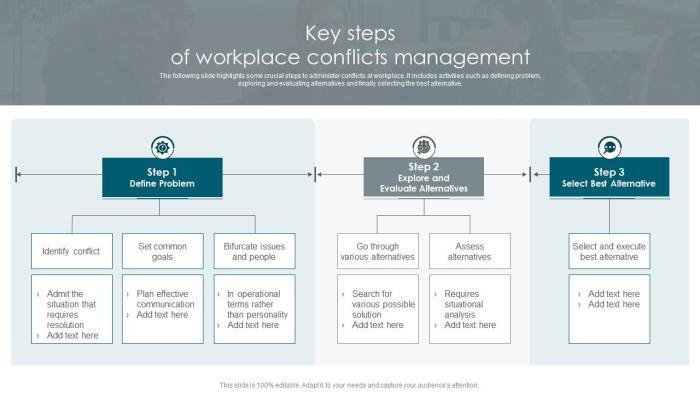
Mastering conflict management isn’t about avoiding disagreements; it’s about transforming them into opportunities for growth and improved teamwork. By understanding different conflict styles, proactively preventing issues, and employing effective resolution techniques, you can cultivate a workplace where challenges are met with collaboration, understanding, and ultimately, positive outcomes. The investment in these strategies pays dividends in increased productivity, improved morale, and a stronger, more cohesive team.