Mastering leadership isn’t just about holding a title; it’s about inspiring, motivating, and guiding individuals and teams towards shared success. This guide delves into the multifaceted world of leadership management, exploring various styles, crucial skills, and effective implementation strategies. From understanding the nuances of transformational and servant leadership to developing emotional intelligence and fostering inclusive team environments, we’ll navigate the complexities of leading with purpose and impact.
We’ll examine practical techniques for improving communication, delegation, and conflict resolution, equipping you with the tools to build high-performing teams and navigate organizational change. Real-world case studies and actionable frameworks will illuminate the path towards effective leadership, empowering you to make a tangible difference in your organization.
Defining Effective Leadership Styles

Effective leadership is crucial for organizational success. Understanding and applying various leadership styles appropriately is key to navigating the complexities of modern workplaces and achieving desired outcomes. This section will explore several prominent leadership styles, analyzing their characteristics, strengths, weaknesses, and suitability in different contexts.
Transformational Leadership
Transformational leadership inspires and motivates followers to achieve extraordinary outcomes. Transformational leaders articulate a compelling vision, foster a shared sense of purpose, and empower individuals to exceed expectations. They achieve this through idealized influence (serving as a role model), inspirational motivation (communicating a clear vision), intellectual stimulation (encouraging creativity and innovation), and individualized consideration (providing personalized support and mentorship). A successful example is Steve Jobs at Apple. His visionary leadership, combined with his ability to inspire and motivate his team, led to the creation of revolutionary products that transformed the technology industry. His ability to articulate a clear vision and inspire unwavering loyalty among his employees is a hallmark of transformational leadership.
Transactional and Servant Leadership: A Comparison
Transactional leadership focuses on establishing clear goals, expectations, and rewards. Leaders use incentives and consequences to motivate employees and maintain order. While efficient in structured environments, it can lack the inspirational element to drive significant change or foster creativity. Strengths include clear expectations and accountability, making it suitable for routine tasks and operational efficiency. However, weaknesses include a potential for limited employee engagement and innovation.
Servant leadership, conversely, prioritizes the needs of followers and empowers them to grow and develop. Servant leaders foster collaboration, build trust, and prioritize ethical considerations. Strengths include increased employee satisfaction and loyalty, leading to improved team cohesion and productivity. Weaknesses include potential difficulties in decision-making in situations requiring rapid action and a potential for exploitation if boundaries aren’t clearly established. A non-profit organization relying on volunteers would greatly benefit from a servant leadership style, fostering collaboration and commitment amongst a team of dedicated but unpaid individuals. Conversely, a fast-paced start-up might find a transactional approach more efficient in the early stages to ensure rapid growth and goal attainment.
Comparison of Leadership Styles
The following table compares four common leadership styles:
| Leadership Style | Communication Methods | Decision-Making Process | Strengths | Weaknesses |
|---|---|---|---|---|
| Autocratic | Top-down, one-way communication | Leader makes decisions independently | Efficient in crisis situations, clear direction | Can stifle creativity, demotivate employees |
| Democratic | Two-way communication, open dialogue | Decisions made collaboratively | Increased employee engagement, diverse perspectives | Slower decision-making process |
| Laissez-faire | Minimal communication, limited guidance | Employees make decisions independently | High autonomy, fosters creativity | Lack of direction, potential for chaos |
| Charismatic | Inspiring, persuasive communication | Decisions may be made unilaterally, but with strong influence | High motivation, strong team cohesion | Potential for dependence on the leader, vulnerability to manipulation |
Developing Leadership Skills & Strategies

Effective leadership isn’t innate; it’s a skillset honed through continuous learning and practice. This section explores key strategies for developing your leadership capabilities, focusing on communication, emotional intelligence, delegation, and team building. Mastering these areas will significantly enhance your ability to inspire, motivate, and guide your team towards success.
Improving Communication Skills Through Active Listening and Constructive Feedback
Effective communication is the cornerstone of successful leadership. Active listening and constructive feedback are two crucial components of this skill. Active listening involves fully concentrating on the speaker, understanding their message, responding thoughtfully, and remembering what was said. Constructive feedback focuses on providing specific, actionable advice that helps individuals improve their performance, rather than simply criticizing their shortcomings.
By actively listening, leaders demonstrate respect and build trust, creating a more open and collaborative environment. This leads to improved understanding, reduced misunderstandings, and increased team cohesion. Providing constructive feedback requires careful consideration of both the individual’s strengths and areas for improvement. Focusing on specific behaviors and their impact, rather than making sweeping generalizations, helps individuals learn and grow.
Emotional Intelligence in Leadership and Enhancing Self-Awareness and Empathy
Emotional intelligence (EQ) is the ability to understand and manage your own emotions and the emotions of others. High EQ leaders are self-aware, empathetic, and socially skilled, enabling them to build strong relationships and navigate complex situations effectively. Self-awareness involves understanding your own emotions, strengths, weaknesses, and how they impact others. This can be achieved through self-reflection, seeking feedback from trusted sources, and engaging in activities like journaling or mindfulness practices. Empathy involves understanding and sharing the feelings of others. Developing empathy requires actively listening, paying attention to non-verbal cues, and attempting to see situations from different perspectives.
Developing self-awareness and empathy allows leaders to connect with their team members on a deeper level, fostering trust and loyalty. This leads to increased motivation, productivity, and a more positive and supportive work environment. Leaders with high EQ are better equipped to handle conflict, build consensus, and create a more inclusive team culture.
Effective Delegation and Empowering Team Members
Effective delegation is crucial for maximizing team productivity and developing individual skills. It involves assigning tasks appropriately, providing necessary resources and support, and empowering team members to take ownership. A step-by-step process for effective delegation includes:
- Assess Team Member Capabilities: Identify individuals with the right skills and experience for the task.
- Clearly Define the Task: Provide specific instructions, outlining expectations, deadlines, and desired outcomes.
- Provide Necessary Resources: Ensure team members have the tools, information, and support they need to succeed.
- Set Clear Expectations: Communicate expectations regarding quality, timelines, and reporting mechanisms.
- Empower Team Members: Grant autonomy and trust team members to manage their tasks independently.
- Provide Support and Guidance: Offer regular check-ins, provide feedback, and address any challenges that arise.
- Recognize and Reward Success: Acknowledge and appreciate the contributions of team members.
Delegation is not simply about offloading work; it’s about developing team members’ skills and fostering a sense of ownership and responsibility. This process empowers individuals, boosts morale, and allows leaders to focus on strategic initiatives.
Fostering a Positive and Inclusive Team Environment and Conflict Resolution
A positive and inclusive team environment is characterized by mutual respect, open communication, and a shared sense of purpose. It fosters collaboration, innovation, and high performance. However, challenges such as personality conflicts, communication breakdowns, and differing opinions can arise. Effective conflict resolution strategies involve:
- Active Listening: Understand each party’s perspective without judgment.
- Identifying the Root Cause: Determine the underlying issues driving the conflict.
- Finding Common Ground: Identify shared goals and interests.
- Brainstorming Solutions: Collaboratively develop solutions that address everyone’s concerns.
- Implementing and Monitoring: Put agreed-upon solutions into action and monitor their effectiveness.
Creating a culture of inclusivity requires actively promoting diversity, valuing different perspectives, and ensuring that all team members feel respected and valued. Leaders should proactively address biases, create opportunities for everyone to contribute, and celebrate the unique talents and experiences of each team member. This leads to a more innovative, creative, and high-performing team.
Implementing Leadership in Management
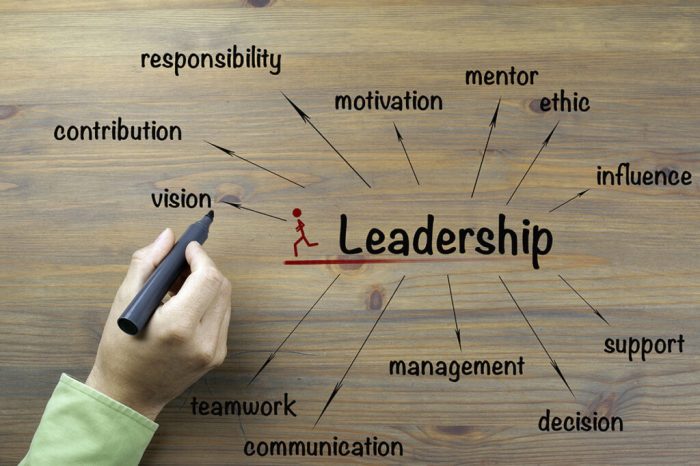
Effective leadership isn’t just about inspiring individuals; it’s about translating vision into tangible results through strategic planning and skillful execution. This section delves into the practical application of leadership principles within a management context, exploring strategic planning, change management, performance management, and showcasing a real-world example of leadership success.
Strategic Vision and Planning
Successful strategic planning involves a clear understanding of the organization’s current state, its desired future state, and a well-defined roadmap to bridge the gap. A robust framework typically includes a thorough environmental analysis (SWOT analysis), the articulation of a compelling vision statement, the setting of measurable goals and objectives, the development of actionable strategies, and the implementation of a comprehensive monitoring and evaluation system. The leader’s role is crucial in guiding this process, ensuring alignment across the organization, and fostering a culture of strategic thinking. A clearly defined vision provides direction and motivates employees to work towards a common goal.
Leadership in Organizational Change Management
Organizational change, while often necessary for growth and adaptation, frequently encounters resistance. Effective leadership is vital in navigating this process. Strategies for overcoming resistance include transparent communication, active employee engagement, and the provision of adequate training and support. Leaders must demonstrate empathy, address concerns proactively, and celebrate successes along the way. Building trust and fostering a sense of shared purpose are key to ensuring the successful adoption of changes. This requires leaders to actively listen to employee feedback and adapt their strategies accordingly.
Case Study: The Turnaround at Nucor
Nucor, a leading steel producer, faced significant challenges in the late 1970s and early 1980s due to intense competition and declining profitability. Ken Iverson, then CEO, implemented a radical change management strategy focused on employee empowerment, continuous improvement (Kaizen), and a strong emphasis on safety and quality. This involved significant investments in new technologies, extensive employee training programs, and a culture shift that prioritized collaboration and problem-solving. The result was a remarkable turnaround, transforming Nucor into a highly profitable and industry-leading company. This success was largely attributed to Iverson’s visionary leadership, his ability to inspire and motivate his workforce, and his commitment to continuous improvement.
Managing Individual and Team Performance
Effective performance management involves setting clear expectations, providing regular feedback, and implementing appropriate performance metrics. For individuals, this might involve setting SMART goals (Specific, Measurable, Achievable, Relevant, Time-bound), providing regular one-on-one feedback sessions, and conducting performance reviews. At the team level, leaders can utilize team-based performance metrics, facilitate regular team meetings for progress updates and problem-solving, and foster a collaborative and supportive team environment. Regular feedback mechanisms, both formal and informal, are essential for identifying areas for improvement and recognizing accomplishments. This requires leaders to be skilled in both giving and receiving feedback constructively. Regular performance reviews and progress tracking should be used to maintain momentum and address any performance gaps.
Final Thoughts
Ultimately, effective leadership management hinges on a combination of understanding diverse leadership styles, cultivating essential skills, and implementing strategies that foster growth and collaboration. By embracing the principles and practices Artikeld in this guide, you’ll be well-equipped to lead with confidence, inspire positive change, and achieve sustainable success. This journey towards becoming a truly effective leader is an ongoing process of learning, adapting, and consistently striving for excellence—a journey we’ve only just begun to explore.