Navigating the complexities of human emotion is a lifelong journey. We all experience a spectrum of feelings, from joy and excitement to anger, sadness, and fear. Understanding and managing these emotions effectively is crucial for overall well-being, influencing our relationships, productivity, and overall mental health. This guide explores four key techniques to help you develop emotional intelligence and cultivate a more balanced and fulfilling life.
This exploration will delve into the physiological underpinnings of emotional responses, providing practical strategies for managing challenging feelings. We’ll examine mindfulness techniques, stress reduction methods, and the importance of building emotional resilience. By understanding the root causes of emotional distress and employing effective coping mechanisms, you can transform your relationship with your emotions and achieve greater emotional control.
Identifying and Understanding Your Emotions
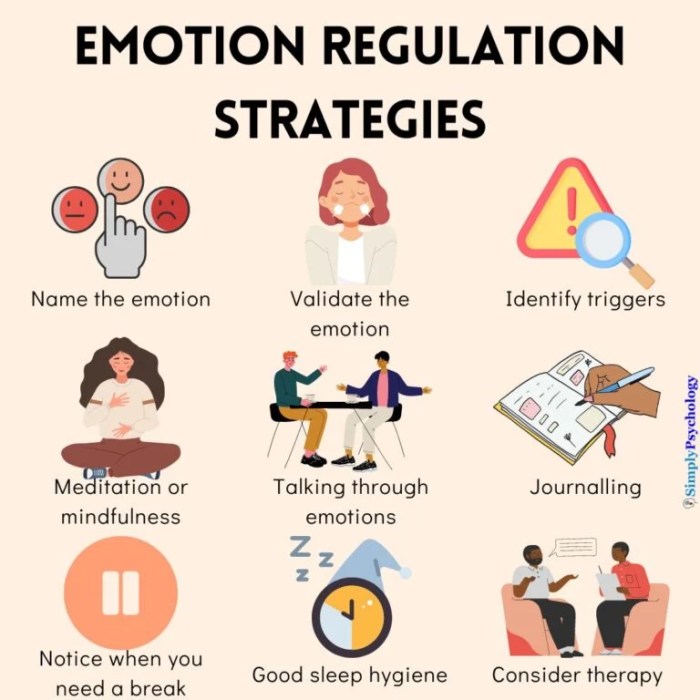
Understanding your emotions is the first step towards effectively managing them. This involves recognizing the different emotions you experience, understanding their triggers, and acknowledging their physiological impact on your body. Ignoring or suppressing emotions rarely works in the long run; instead, understanding them allows for healthier coping strategies.
Common Emotional Responses to Stressful Situations
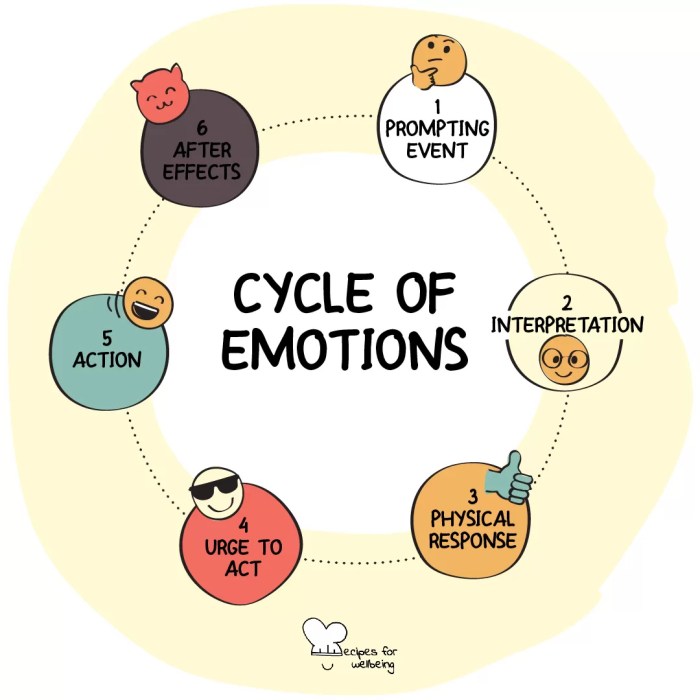
Stressful situations often evoke a range of emotional responses. Common reactions include anxiety, fear, anger, sadness, frustration, and even numbness. The intensity and specific emotions experienced vary greatly depending on individual personality, past experiences, and the nature of the stressor. For instance, a looming deadline might trigger anxiety in one person and anger in another. Similarly, the loss of a loved one might lead to profound sadness and grief, while a minor car accident might result in a mix of fear and frustration. The key is to identify which emotions are most prevalent for you in various stressful situations.
Physiological Effects of Different Emotions
Emotions are not merely mental states; they have significant physiological consequences. Anger, for example, can manifest as increased heart rate, elevated blood pressure, clenched fists, and tense muscles. Fear might lead to rapid breathing, sweating, trembling, and a feeling of unease in the stomach. Sadness often presents with fatigue, slowed heart rate, tearfulness, and a general feeling of heaviness. These physical sensations are your body’s way of responding to emotional stimuli. Recognizing these physical cues can help you pinpoint the emotion you’re experiencing, even if you’re initially unaware of it.
Situations Triggering Strong Emotional Responses
Numerous situations can trigger intense emotional responses. Examples include significant life changes (e.g., marriage, divorce, job loss), personal losses (e.g., death of a loved one, ending of a relationship), interpersonal conflicts (e.g., arguments with family or friends, workplace disputes), financial difficulties, health problems, and traumatic events. These events can overwhelm our coping mechanisms, leading to intense emotional reactions. It’s important to acknowledge that the intensity of the emotional response is subjective and varies from person to person.
Comparison of Emotional Coping Mechanisms
Understanding different coping mechanisms and their effectiveness is crucial for managing emotions. The following table compares and contrasts several common approaches:
| Coping Mechanism | Description | Advantages | Disadvantages |
|---|---|---|---|
| Suppression | Ignoring or denying emotions. | Provides temporary relief from uncomfortable feelings. | Can lead to increased stress, anxiety, and physical health problems in the long term; emotions are not processed. |
| Emotional Expression | Openly expressing emotions through healthy outlets like talking to someone or journaling. | Promotes emotional processing and reduces stress; strengthens relationships. | May be difficult for some individuals; requires trust and vulnerability. |
| Problem-Solving | Identifying and addressing the root cause of the emotion. | Can lead to long-term resolution of issues causing distress. | May not be applicable to all situations; requires effort and planning. |
| Mindfulness | Paying attention to the present moment without judgment. | Reduces stress and anxiety; improves emotional regulation. | Requires practice and dedication; may not be effective in highly stressful situations immediately. |
Practical Techniques for Managing Emotions
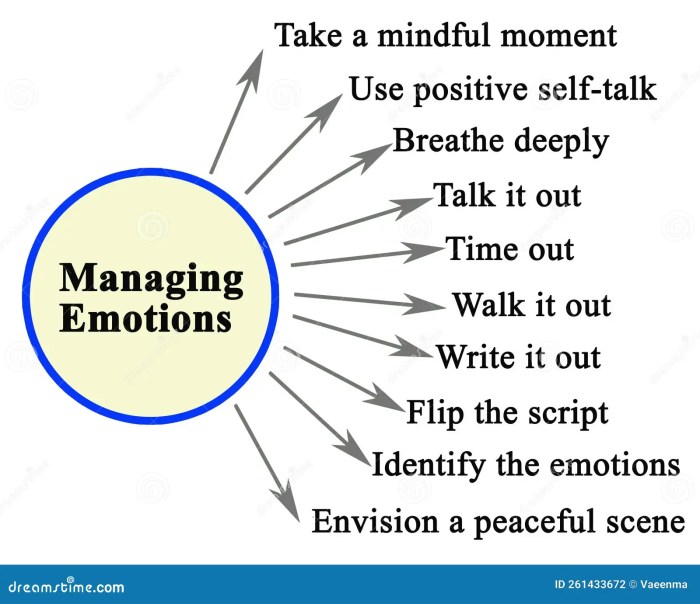
Managing emotions effectively is a crucial life skill, impacting our relationships, health, and overall well-being. This section explores practical techniques to help you navigate challenging emotional states and cultivate a greater sense of emotional balance. These techniques are not mutually exclusive; many can be used in conjunction for a more holistic approach.
Mindfulness Meditation for Emotional Regulation
Mindfulness meditation involves focusing on the present moment without judgment. By cultivating awareness of your thoughts, feelings, and bodily sensations, you can gain distance from overwhelming emotions. Regular practice strengthens your ability to observe emotions rather than being swept away by them. This creates space for a more considered response, rather than a reactive one. For example, instead of immediately reacting to anger with a harsh word, mindful awareness might allow you to pause, observe the physical sensations of anger (e.g., tightening in the chest, clenched jaw), and choose a calmer response. Studies have shown that mindfulness meditation can reduce stress hormones like cortisol, leading to improved emotional regulation and overall well-being. The consistent practice of even short meditation sessions (5-10 minutes daily) can yield significant benefits.
Deep Breathing Exercises for Anxiety Reduction
Deep breathing exercises are a simple yet powerful tool for managing anxiety. By slowing down your breath, you activate the parasympathetic nervous system, which counteracts the “fight-or-flight” response associated with anxiety. A common technique is diaphragmatic breathing, also known as belly breathing.
- Find a comfortable position, either sitting or lying down.
- Place one hand on your chest and the other on your abdomen.
- Inhale slowly and deeply through your nose, allowing your abdomen to rise while your chest remains relatively still.
- Hold your breath for a few seconds.
- Exhale slowly and completely through your mouth, feeling your abdomen fall.
- Repeat this process for 5-10 minutes, focusing on the sensation of your breath.
This technique can be practiced anytime, anywhere, providing immediate relief from anxiety symptoms. The focus on the breath anchors you in the present moment, diverting attention from anxious thoughts.
Constructive Anger Management Strategies
Anger is a normal human emotion, but unmanaged anger can be destructive. Developing healthy coping mechanisms is crucial.
- Identify your triggers: Understanding what situations or people tend to elicit anger helps you anticipate and prepare for challenging moments.
- Pause and breathe: Before reacting, take a few deep breaths to calm your nervous system.
- Express your anger assertively, not aggressively: Clearly communicate your feelings and needs without resorting to insults or threats. For example, instead of shouting “You always do this!”, try saying “I feel frustrated when this happens. Can we talk about it?”
- Problem-solve: Focus on finding solutions rather than dwelling on the problem.
- Seek professional help: If anger is significantly impacting your life, consider seeking guidance from a therapist or counselor.
Learning to manage anger constructively improves relationships, reduces stress, and promotes overall well-being.
Cognitive Restructuring for Challenging Negative Thought Patterns
Cognitive restructuring involves identifying and challenging negative or distorted thought patterns that contribute to negative emotions. These patterns often involve catastrophizing (assuming the worst), overgeneralizing (drawing broad conclusions from single events), and personalization (taking responsibility for things outside your control). By recognizing and reframing these thoughts, you can reduce their emotional impact. For example, if you fail a test and think “I’m a complete failure,” cognitive restructuring might involve challenging that thought: “While I didn’t do well on this test, it doesn’t define my abilities. I can learn from my mistakes and do better next time.” This process often involves replacing negative thoughts with more balanced and realistic ones. This technique empowers you to take control of your emotional responses by changing the way you think.
Building Emotional Resilience
Developing emotional resilience is crucial for navigating life’s inevitable challenges. It’s about cultivating the ability to bounce back from setbacks, adapt to change, and maintain a sense of well-being even in the face of adversity. This involves understanding your emotional responses, employing effective coping strategies, and building a strong support network.
Self-Compassion in Managing Emotional Setbacks
Self-compassion, the practice of treating oneself with kindness, understanding, and acceptance, plays a vital role in managing emotional setbacks. Instead of harshly criticizing yourself after a mistake or disappointment, self-compassion encourages a gentler, more supportive inner dialogue. This approach helps reduce self-blame and fosters a sense of self-worth, enabling quicker recovery from emotional distress. For example, imagine failing an important exam. Instead of dwelling on your perceived inadequacy (“I’m so stupid!”), self-compassion would involve acknowledging the difficulty of the situation (“This exam was challenging, and I did my best”), recognizing that everyone makes mistakes (“Everyone experiences setbacks; it’s part of learning”), and offering yourself kindness and support (“I’ll learn from this and do better next time”).
Healthy Coping Mechanisms for Grief and Loss
Experiencing grief and loss is a deeply personal journey. Healthy coping mechanisms can significantly ease the pain and facilitate healing. These strategies help individuals process their emotions, adjust to their new reality, and gradually rebuild their lives.
- Allowing oneself to feel the emotions fully, without judgment or suppression.
- Seeking support from trusted friends, family, or a therapist.
- Engaging in self-care activities, such as exercise, healthy eating, and sufficient sleep.
- Participating in meaningful activities that bring comfort and a sense of purpose.
- Journaling or engaging in creative expression to process emotions.
- Remembering and celebrating the life of the person or thing lost through positive memories and stories.
Effectiveness of Different Stress Management Techniques
Various stress management techniques offer different benefits, depending on individual preferences and needs. Some techniques focus on relaxation, others on cognitive restructuring, and still others on behavioral changes.
| Technique | Description | Effectiveness |
|---|---|---|
| Mindfulness Meditation | Focusing on the present moment without judgment. | Highly effective for reducing anxiety and improving emotional regulation. Studies show significant reductions in cortisol levels. |
| Progressive Muscle Relaxation | Systematically tensing and releasing muscle groups to reduce physical tension. | Effective for managing physical symptoms of stress, such as muscle aches and headaches. |
| Cognitive Behavioral Therapy (CBT) | Identifying and challenging negative thought patterns. | Highly effective for addressing underlying cognitive distortions that contribute to stress and anxiety. |
| Exercise | Engaging in regular physical activity. | Releases endorphins, reducing stress and improving mood. Numerous studies demonstrate its positive impact on mental health. |
Building a Strong Support System
A robust support system provides a crucial buffer against emotional distress. It offers a sense of belonging, validation, and practical assistance during challenging times.
- Close Relationships: Cultivating strong bonds with family and friends who offer unconditional love and support.
- Professional Support: Seeking guidance from therapists, counselors, or other mental health professionals.
- Support Groups: Connecting with others who share similar experiences and challenges.
- Community Involvement: Participating in activities and groups that foster a sense of belonging and connection.
- Online Communities: Utilizing online forums and groups to connect with others who understand specific challenges.
Summary
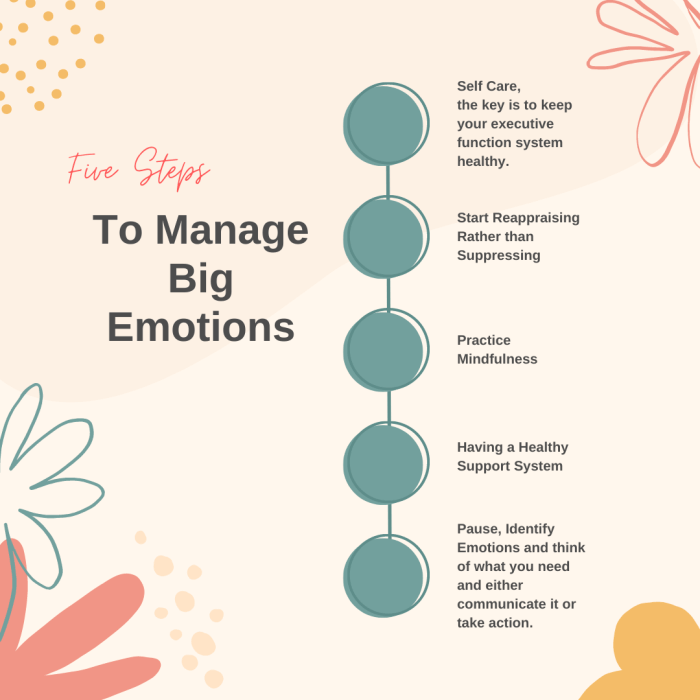
Mastering your emotions isn’t about suppressing feelings; it’s about developing the skills to understand, process, and respond to them in healthy ways. By integrating mindfulness, deep breathing, cognitive restructuring, and building a supportive network, you equip yourself with the tools to navigate life’s inevitable challenges with greater emotional intelligence and resilience. Remember that self-compassion is key; be kind to yourself throughout this process, and celebrate your progress along the way. The journey towards emotional well-being is a worthwhile investment in yourself.