Unlock your full potential with “The Ultimate Guide to Self-Management.” This comprehensive guide equips you with practical strategies and actionable techniques to master your time, achieve your goals, and prioritize your well-being. We’ll explore proven methodologies, from time-blocking and the Pomodoro Technique to SMART goal setting and effective stress management, empowering you to take control of your life and thrive.
Through insightful examples and clear explanations, you’ll learn to design a personalized system for productivity and self-care. Discover how to overcome procrastination, cultivate healthy habits, and build resilience in the face of challenges. This guide isn’t just about managing your schedule; it’s about mastering your life.
Mastering Time Management

Effective time management is crucial for achieving personal and professional goals. It’s about prioritizing tasks, optimizing your workflow, and consciously allocating your time to maximize productivity and minimize stress. This section will explore practical strategies and techniques to help you become a master of your time.
Designing a Daily Schedule
Creating a daily schedule that incorporates time blocking and prioritization is fundamental to effective time management. Time blocking involves allocating specific time slots for particular tasks, while prioritization focuses on tackling the most important activities first. This structured approach helps maintain focus and prevent tasks from slipping through the cracks. A well-designed schedule promotes a sense of control and accomplishment.
| Time | Activity | Priority | Notes |
|---|---|---|---|
| 7:00 AM – 7:30 AM | Morning Routine (Exercise, Meditation) | High | Sets the tone for a productive day. |
| 7:30 AM – 8:30 AM | Breakfast, Commute | Medium | Prepare for the day ahead. |
| 8:30 AM – 12:30 PM | Work: Project X (High-Priority Tasks) | High | Focus on the most important tasks. |
| 12:30 PM – 1:30 PM | Lunch Break | Medium | Recharge and disconnect. |
| 1:30 PM – 4:30 PM | Work: Project Y (Lower-Priority Tasks) | Medium | Address less urgent tasks. |
| 4:30 PM – 5:00 PM | Plan for Tomorrow | High | Prepare for the next day’s tasks. |
| 5:00 PM – 6:00 PM | Personal Time/Hobbies | Medium | Engage in activities you enjoy. |
| 6:00 PM – 7:00 PM | Dinner | Medium | Enjoy a relaxing meal. |
| 7:00 PM – 9:00 PM | Relaxation/Self-Care | High | Wind down before bed. |
| 9:00 PM – 10:00 PM | Prepare for Sleep | High | Ensure a restful night’s sleep. |
The Pomodoro Technique
The Pomodoro Technique is a time management method that uses a timer to break down work into intervals, traditionally 25 minutes in length, separated by short breaks. Its benefits include increased focus, improved concentration, and reduced burnout. However, it might not be suitable for all tasks or individuals, and requires discipline to implement effectively.
A step-by-step guide to implementing the Pomodoro Technique:
1. Choose a task to work on.
2. Set a timer for 25 minutes.
3. Work on the task until the timer rings, avoiding distractions.
4. Take a 5-minute break.
5. After four Pomodoros, take a longer break (15-20 minutes).
6. Repeat the process.
Comparison of Time Management Methodologies
Different time management methodologies offer varying approaches to task organization and prioritization. Understanding their strengths and weaknesses allows for a personalized approach.
| Methodology | Description | Strengths | Weaknesses |
|---|---|---|---|
| Eisenhower Matrix (Urgent/Important) | Categorizes tasks based on urgency and importance. | Prioritizes tasks effectively, helps focus on high-impact activities. | Requires regular reassessment of priorities, can be inflexible. |
| Getting Things Done (GTD) | A comprehensive system for capturing, clarifying, organizing, reflecting on, and engaging with tasks. | Highly organized, reduces mental clutter, promotes clarity. | Can be complex to implement, requires significant upfront time investment. |
Overcoming Procrastination and Improving Focus
Procrastination and a lack of focus are common obstacles to effective time management. Strategies for overcoming these challenges include breaking down large tasks into smaller, more manageable steps, setting realistic goals, eliminating distractions, and utilizing techniques like the Pomodoro Technique or time blocking. Regular breaks and self-care are also essential for maintaining focus and preventing burnout. Prioritizing tasks based on their importance and urgency can also significantly reduce procrastination.
Cultivating Effective Goal Setting and Achievement

Effective goal setting is the cornerstone of self-management. Without clearly defined objectives, efforts can become scattered and unproductive. This section details a robust framework for setting and achieving goals, transforming aspirations into tangible results.
The process of goal setting isn’t just about dreaming big; it’s about strategically planning how to reach those dreams. By employing a structured approach, you can maximize your chances of success and maintain momentum throughout the journey.
The SMART Goal-Setting Framework
The SMART framework provides a practical method for creating effective goals. SMART stands for Specific, Measurable, Achievable, Relevant, and Time-bound. Each element plays a crucial role in ensuring your goals are well-defined and attainable.
Let’s illustrate this with examples:
- Unsmart Goal: Get in better shape.
- SMART Goal: Lose 10 pounds by December 31st by exercising three times a week and reducing daily calorie intake by 500 calories.
- Unsmart Goal: Be more productive at work.
- SMART Goal: Complete all assigned projects by their deadlines, reducing outstanding tasks by 50% by the end of Q3, measured by the project management software.
- Unsmart Goal: Save more money.
- SMART Goal: Save $5,000 by the end of the year by automating $200 monthly transfers to a savings account and reducing non-essential spending by 15%, tracked via a budgeting app.
Breaking Down Large Goals into Manageable Tasks
Large, complex goals can feel overwhelming. A crucial step in achieving them is breaking them down into smaller, more manageable tasks. This makes the overall goal less daunting and provides a sense of accomplishment as each smaller task is completed.
Here’s a system for effective decomposition:
- Define the ultimate goal: Clearly articulate your overarching objective.
- Identify key milestones: Determine significant checkpoints along the way.
- Break down milestones into tasks: Divide each milestone into smaller, actionable steps.
- Prioritize tasks: Focus on the most critical tasks first.
- Schedule tasks: Allocate specific time slots for each task in your calendar.
- Assign resources: Identify any necessary resources (time, tools, people).
Regular Goal Review and Adjustment
Regular review and adjustment are essential for staying on track. Circumstances change, and your goals may need to be adapted accordingly. Consistent monitoring allows for timely course correction, preventing setbacks and ensuring continued progress.
Strategies for staying on track include:
- Weekly check-ins: Review progress and identify any roadblocks.
- Monthly evaluations: Assess overall progress and make adjustments as needed.
- Seek feedback: Get input from others to gain different perspectives.
- Flexibility: Be prepared to adapt your goals if necessary.
Reward Systems for Goal Attainment
Reward systems are powerful motivators. Celebrating milestones, both big and small, reinforces positive behavior and keeps you engaged. These rewards should be meaningful and aligned with your personal preferences.
Examples of reward systems include:
- Small rewards for completing tasks: A favorite coffee, a short break, listening to a podcast.
- Larger rewards for achieving milestones: A weekend getaway, a new gadget, a celebratory dinner.
- Non-material rewards: Spending time with loved ones, engaging in a hobby, pursuing personal development.
Prioritizing Self-Care and Well-being

Self-care is not a luxury; it’s a necessity for effective self-management. Prioritizing your well-being is crucial for maintaining productivity, preventing burnout, and enjoying a fulfilling life. Neglecting self-care can lead to decreased performance, increased stress, and negatively impact both your physical and mental health. This section explores practical strategies for incorporating self-care into your daily routine.
Stress Management Techniques
Effective stress management is fundamental to overall well-being and successful self-management. Chronic stress can severely impact physical and mental health, leading to decreased productivity and a diminished quality of life. Implementing various stress-reduction techniques can significantly improve your ability to cope with daily pressures and maintain a balanced lifestyle.
- Mindfulness Meditation: Practicing mindfulness involves focusing on the present moment without judgment. Regular meditation can reduce anxiety and improve emotional regulation. A simple technique involves focusing on your breath, noticing sensations in your body, and gently redirecting your attention when your mind wanders.
- Deep Breathing Exercises: Deep, slow breaths activate the parasympathetic nervous system, which helps to calm the body and reduce stress responses. Techniques like diaphragmatic breathing (belly breathing) can be practiced anywhere, anytime.
- Progressive Muscle Relaxation: This technique involves systematically tensing and releasing different muscle groups in the body. By focusing on physical sensations, it helps to reduce muscle tension and promote relaxation.
- Yoga and Tai Chi: These practices combine physical postures, breathing techniques, and meditation to promote relaxation, flexibility, and stress reduction. They offer a holistic approach to well-being.
- Spending Time in Nature: Studies show that spending time outdoors can lower stress hormones and improve mood. Even a short walk in a park can have a significant positive impact.
The Importance of Sleep Hygiene
Sufficient, high-quality sleep is paramount for both physical and mental well-being. Sleep deprivation directly impacts cognitive function, mood regulation, and overall productivity. Adequate sleep allows the body and mind to repair and rejuvenate, preparing you for the demands of the day.
Sleep hygiene refers to the habits and practices that promote good sleep. A consistent sleep schedule, a comfortable sleep environment, and avoiding caffeine and alcohol before bed are all crucial components. Aim for 7-9 hours of quality sleep per night to optimize your physical and cognitive performance. Insufficient sleep can lead to decreased concentration, impaired decision-making, and increased irritability, significantly hindering your ability to manage your time and achieve your goals effectively.
A Sample Weekly Self-Care Plan
This sample plan provides a framework; adjust it to suit your individual needs and preferences.
| Day | Physical Activity | Healthy Eating | Mental Wellness |
|---|---|---|---|
| Monday | 30-minute brisk walk | Prepare a healthy lunch and dinner | 15 minutes of meditation |
| Tuesday | Yoga class | Focus on consuming plenty of fruits and vegetables | Read a book for pleasure |
| Wednesday | Strength training | Limit processed foods and sugary drinks | Listen to calming music |
| Thursday | Swimming | Hydrate throughout the day | Spend time in nature |
| Friday | Cycling | Enjoy a healthy, balanced meal | Journaling |
| Saturday | Hiking | Prepare meals in advance for the week | Spend time with loved ones |
| Sunday | Rest and relaxation | Plan healthy meals for the upcoming week | Engage in a hobby |
Strategies for Setting Healthy Boundaries
Setting healthy boundaries is essential for preventing burnout and maintaining a balanced lifestyle. This involves learning to say “no” to requests that overwhelm you or compromise your well-being. Assertive communication is key to setting boundaries effectively.
Examples of assertive communication include clearly stating your needs and limits, using “I” statements (“I feel overwhelmed if I take on more tasks.”), and respectfully declining requests that you are unable to fulfill. Learning to prioritize your own needs alongside the needs of others is crucial for long-term well-being and effective self-management. It’s okay to say “no” to protect your time, energy, and mental health. Remember, setting boundaries is not selfish; it’s self-preservation.
End of Discussion
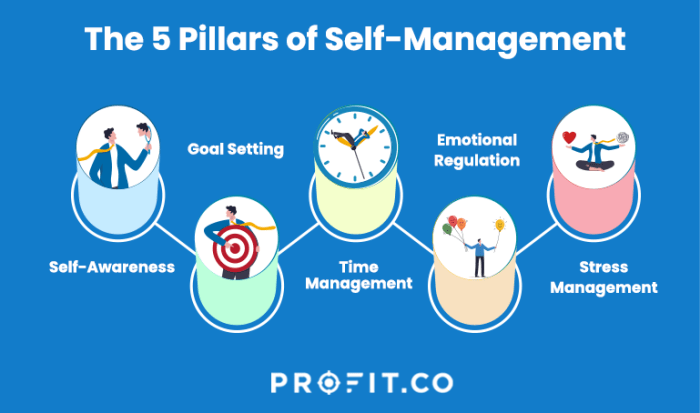
By implementing the strategies Artikeld in “The Ultimate Guide to Self-Management,” you’ll cultivate a holistic approach to personal effectiveness. You will gain the tools to not only manage your time and achieve your goals but also to nurture your well-being and create a fulfilling life. Remember, self-management is a journey, not a destination; embrace the process, celebrate your progress, and enjoy the rewards of a life lived intentionally.